
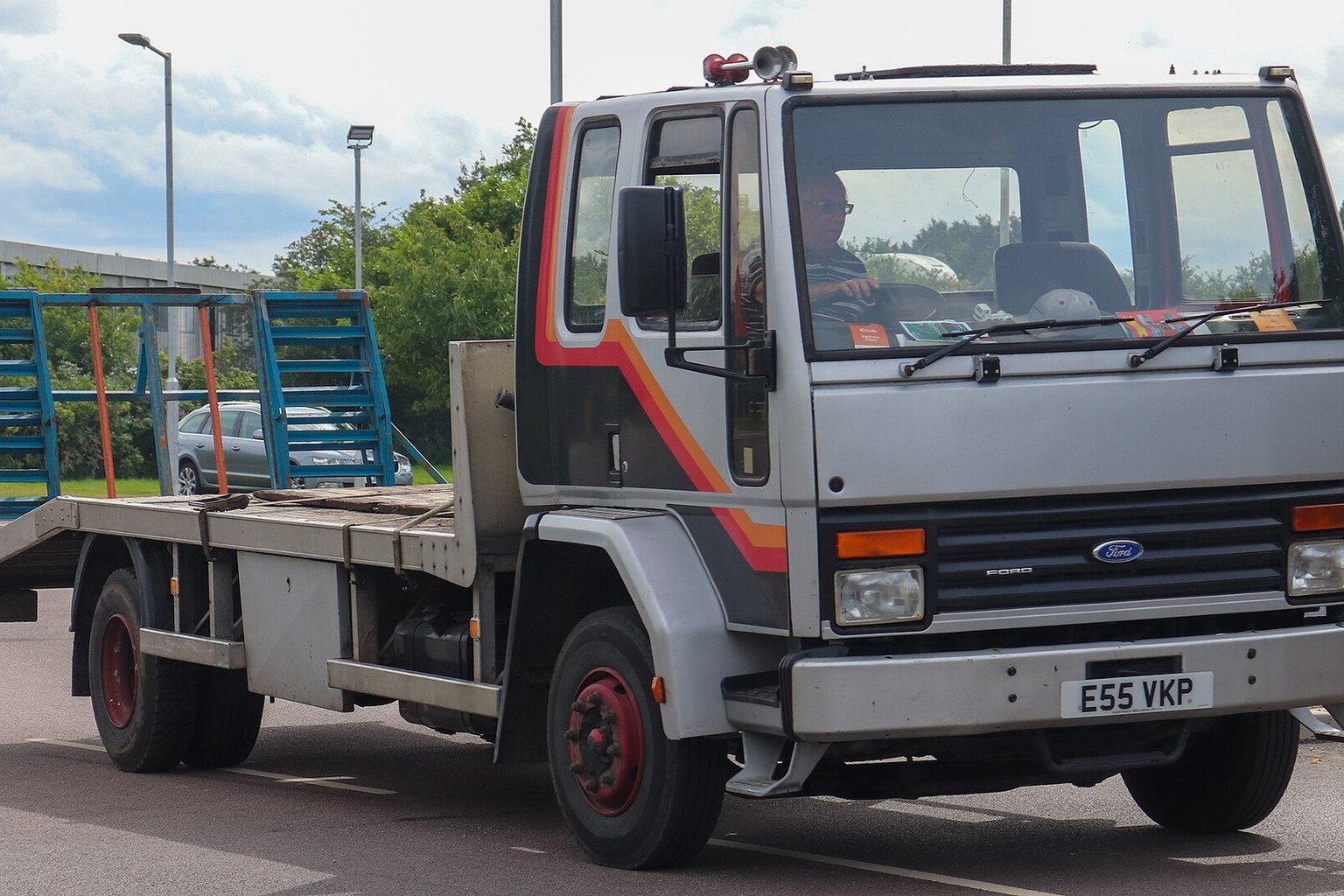
Overweight containers, oversized heavy-duty components, and flatbed loads that need permits — here's how Ad Hoc transloads and hauls the freight that won't fit a standard dry van.
Not every load fits in a box on a van
A lot of freight moves fine in a standard dry van, and nobody thinks twice about it. Then there's the other category: an overweight ocean container that's legal at sea but over the road-legal axle weight the moment it's on a chassis, a piece of heavy-duty equipment too wide or too tall for an enclosed trailer, a palletized load that's simply too heavy for the floor of a standard van. This is the freight that needs flatbed and step-deck equipment, permits, and people who've handled it before.
Ad Hoc Logistics runs oversize and overweight freight on flatbed and step-deck trailers as a core service, and pairs it with the port-side transloading that turns a stuffed container into road-legal, palletized freight. For heavy-duty parts and equipment coming through Seattle and Tacoma, that combination is what gets a heavy import from the vessel to the final door without an over-limit citation or a damaged component along the way.
The overweight-container problem, specifically
Here's a scenario that catches importers off guard. A container is packed dense — heavy metal parts, tightly loaded — and it's perfectly fine on the ship. Mount it on a standard chassis for the drive off the terminal, though, and the combined weight blows past legal road axle limits. Now you have a box you can't legally haul on a normal setup, sitting at the terminal, Last Free Day approaching.
There are two ways through it, and Ad Hoc runs both. One is the overweight corridor: specialized chassis configurations and permitted routes that let a heavy container move legally over the road within a defined lane. The other is transloading — devanning the container at a port-side facility and redistributing the cargo onto flatbeds or into legal-weight loads so it can move anywhere without a permit headache. Which one's right depends on the freight, the destination, and the timeline, and having an account manager who knows the difference is how the call gets made before the demurrage clock forces a bad one.
Transloading is where the container meets the flatbed
Transloading is the quiet workhorse of heavy-import logistics. Ad Hoc handles both palletized and floor-loaded transloading, which for container-to-flatbed work means the cargo comes out of the box and goes onto open-deck equipment sized and secured for what it actually is. Oversized components get loaded on flatbed or step-deck with the right height clearance instead of being crammed into an enclosure that doesn't fit them.
Because Ad Hoc owns its equipment and runs the drayage, the transload isn't a handoff between three companies — the same team pulls the container, devans it, and re-loads it onto the outbound trailer. That continuity is where oversized, heavy-duty parts get handled with care instead of getting banged around in an extra transfer nobody's accountable for.
What the oversize and heavy-freight service covers
- Flatbed and step-deck haulage for oversize and overweight freight, sized to the load rather than forced into a dry van.
- Container-to-flatbed transloading — devanning heavy container cargo and re-loading onto open-deck equipment.
- Palletized and floor-loaded transloading for whatever shape the freight actually arrives in.
- Overweight-container corridor moves with the right chassis configuration and permitted routing.
- Permit handling for oversize and overweight loads so the move is legal end to end.
- Careful handling of oversized heavy-duty parts and equipment through every transfer, on one accountable team.
From the vessel to the shop floor
For PartStop, the heavy end of the catalog — the bulky, dense, awkward components that don't ship like a box of filters — depends on exactly this capability. A heavy import that arrives overweight and has to sit while someone figures out how to move it is a stockout waiting to happen. A heavy import that gets transloaded onto the right flatbed and permitted where it needs to be keeps moving.
That's the connection between open-deck logistics and a well-stocked storefront. When Ad Hoc can take a heavy, overweight container off the Tacoma terminal and turn it into road-legal freight headed to the right place, the premium-quality aftermarket direct replacement parts inside it reach the shelf on schedule — even the big, heavy ones that give lesser logistics setups trouble.
Work with our partners
For overweight containers and oversized heavy-duty freight through Seattle and Tacoma, Ad Hoc's flatbed, step-deck, and transloading services move it legally and in one piece.
Get a Quote from Ad Hoc LogisticsShop related parts
Premium-quality aftermarket direct replacements — nationwide same-day shipping, 6+ month warranty.
Need the part, not just the reading?
Every part below is a Premium Quality aftermarket Direct Replacement with published OEM cross-reference numbers, a 6+ month warranty and same-business-day shipping from Tacoma, WA. Not sure it fits? Run your VIN — or call and a person who knows trucks will verify fitment before you pay.