
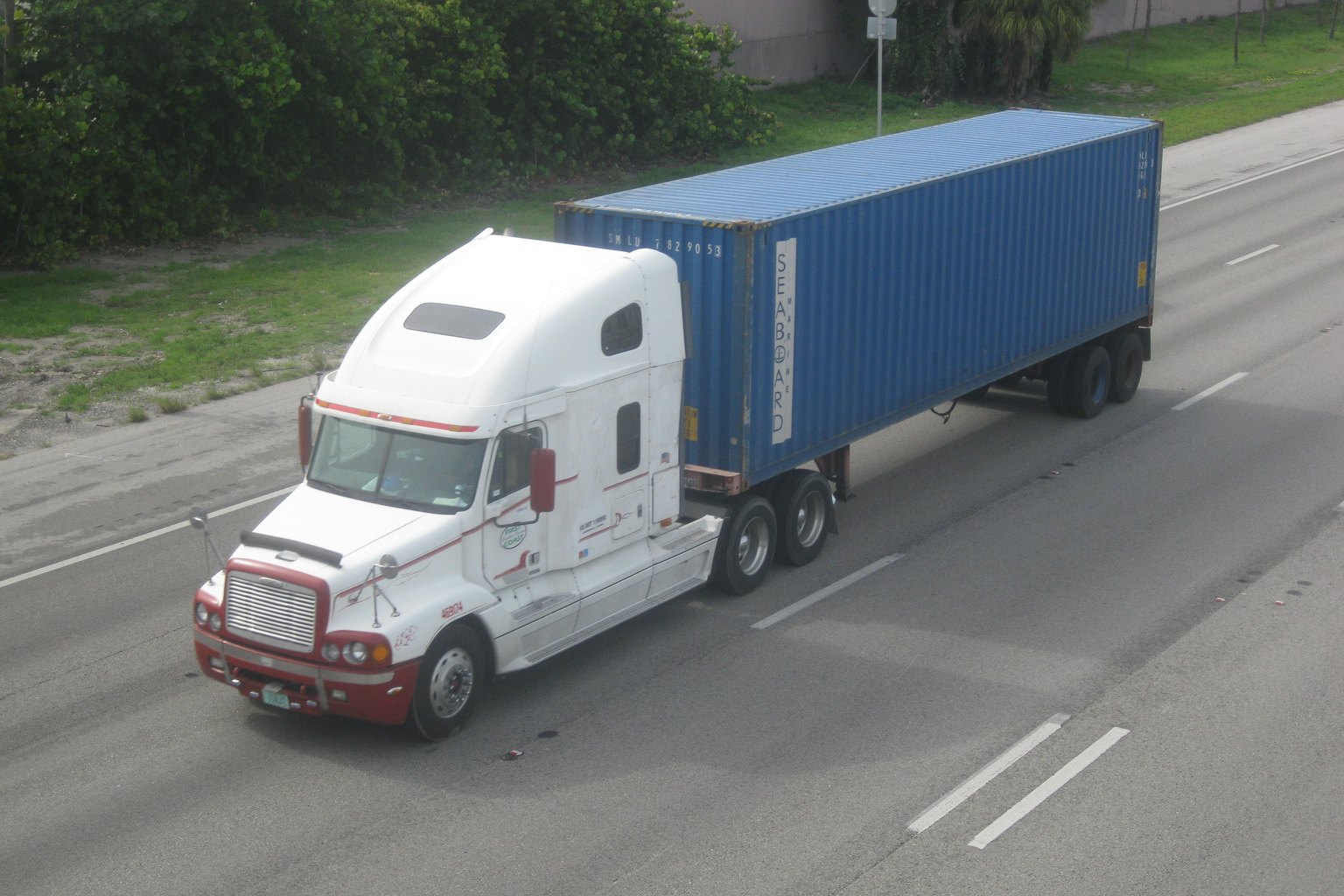
Drayage is the short move that makes or breaks an import. Here's how Long Road Transportation pulls PartStop's containers off the Puget Sound ports before the free time runs out.
What drayage actually is (and why it's the hardest short trip in freight)
Drayage is the unglamorous middle of the supply chain. It's the short haul that moves a loaded container from the marine terminal or the rail yard to a nearby warehouse, and then hauls the empty box back so the steamship line doesn't start charging you for it. On a map it might be twenty miles. On a bad day it can eat a whole shift. Nobody writes home about drayage, but if it stalls, everything behind it stalls too: the parts don't hit the shelf, the orders don't ship, and the customer who needs a bumper by Friday starts calling somebody else.
The reason this short trip is so hard has nothing to do with distance. It's the choreography. A container coming off a vessel at the Port of Tacoma has to clear customs, get released by the line, be available in the terminal's system, and then be pulled during a window the terminal is actually willing to hand it over. Miss the alignment and the box sits. When the box sits past its free time, the meter starts running, and the charges have names most importers learn the hard way: demurrage at the terminal, per diem on the chassis, detention on the driver's clock.
Why local port knowledge beats a cheap out-of-town rate
The Puget Sound gateway has its own rhythm. Terminals at Seattle and Tacoma run their own appointment systems, their own gate hours, their own quirks about which lanes move and which back up by mid-morning. A driver who works these terminals every week knows when to show up, which terminal is running slow that day, and how to read the signals before a container turns into a problem. A carrier who parachutes in on a cheap spot-market rate is learning all of that on your dime, and usually on the day you can least afford it.
This is where a group-partner carrier earns its keep. Long Road Transportation is a Tacoma-based company that runs container drayage out of the Ports of Seattle and Tacoma as a core service. That local presence isn't a marketing line, it's the difference between a container that clears the terminal on the first appointment and one that racks up storage while everyone waits on a callback. When the crew lives in the same region as the port, the trip from vessel to warehouse stays measured in hours, not days lost to missed windows.
The clock that costs you money: free time, demurrage, and per diem
Every imported container comes with a built-in countdown. The steamship line gives you a set number of free days to pull the box off the terminal, and the terminal gives you a set number of free days before storage kicks in. Those clocks don't wait for a convenient moment. They run through weekends, through terminal congestion, through the afternoon your booked carrier suddenly can't cover the load. Awareness of exactly where each container sits on those clocks is half the job, and it's the half amateurs skip.
A drayage team that tracks free time as an active number rather than a vague deadline can sequence pickups so the most urgent box moves first. That's planning you only get from a carrier that treats the port as home turf and has skin in keeping your freight on schedule.
How the group partnership keeps PartStop's parts moving
PartStop imports a real share of its heavy-duty parts through the Puget Sound ports. Those containers land in Seattle and Tacoma and have to get to the PartStop warehouse before free time expires and before customers waiting on inventory start looking elsewhere. Because Long Road Transportation and PartStop are part of the same Tacoma-based group, the coordination is tight in a way an arms-length vendor relationship rarely is. There's no game of phone tag between companies that barely know each other. Everyone is pulling in the same direction on the same schedule.
The practical result is boring in the best way. Containers get pulled on time. Empties go back before per diem hits. Imported parts land on the PartStop shelf ready to sell, whether that's a fresh run of premium-quality aftermarket direct replacement components or the oversized items PartStop is known for. When the port move is handled by a partner who already knows the drill, the rest of the operation gets to run like it should.
What tight port-to-shelf drayage looks like in practice
- Containers pulled from Seattle and Tacoma terminals during the right appointment windows, not whenever a stranger's truck happens to be free
- Active tracking of free time so the boxes closest to demurrage move first
- Empties returned promptly to keep per diem and detention charges off the invoice
- A Tacoma-based crew that knows the local terminals, gate hours, and congestion patterns
- Group-level coordination between Long Road and PartStop so nothing gets lost in the handoff
- Reliable delivery to the warehouse so imported inventory is on the shelf and sellable fast
The takeaway for anyone importing through Puget Sound
Drayage is where import savings quietly disappear or quietly hold. A rock-bottom haulage rate means nothing if the container spends three extra days accruing storage because the carrier didn't understand the terminal. The importers who keep their landed costs predictable are the ones who treat drayage as a skilled, local job and partner with a carrier who lives in the port's backyard. For PartStop, that partner is Long Road Transportation, and the parts on the shelf are the proof it works.
Work with our partners
If you're importing through Seattle or Tacoma, Long Road Transportation can handle your container drayage before the free time runs out.
Get a Quote from Long Road TransportationShop related parts
Premium-quality aftermarket direct replacements — nationwide same-day shipping, 6+ month warranty.
Need the part, not just the reading?
Every part below is a Premium Quality aftermarket Direct Replacement with published OEM cross-reference numbers, a 6+ month warranty and same-business-day shipping from Tacoma, WA. Not sure it fits? Run your VIN — or call and a person who knows trucks will verify fitment before you pay.