
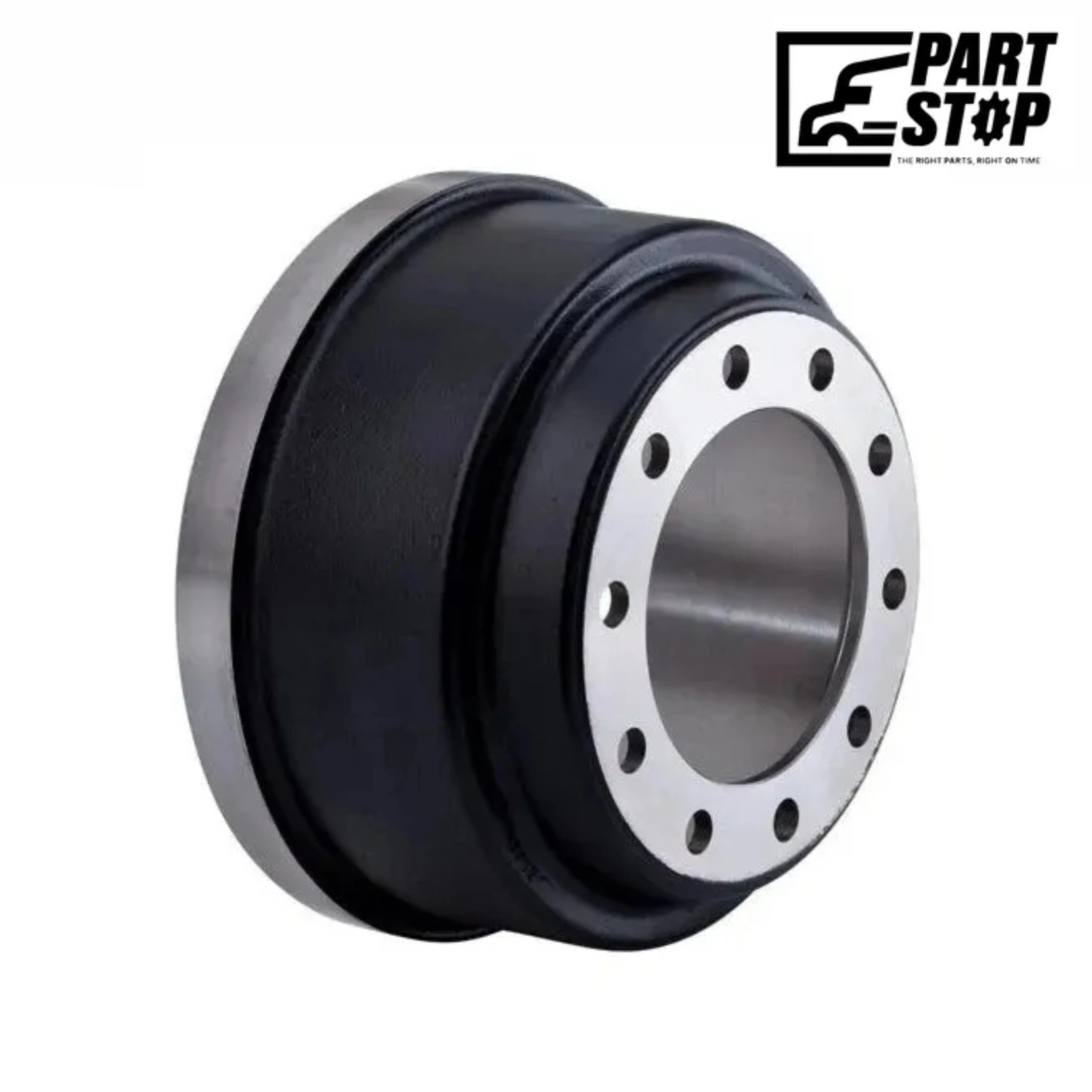
Reading the drum: discard diameter, heat checks and hard spots
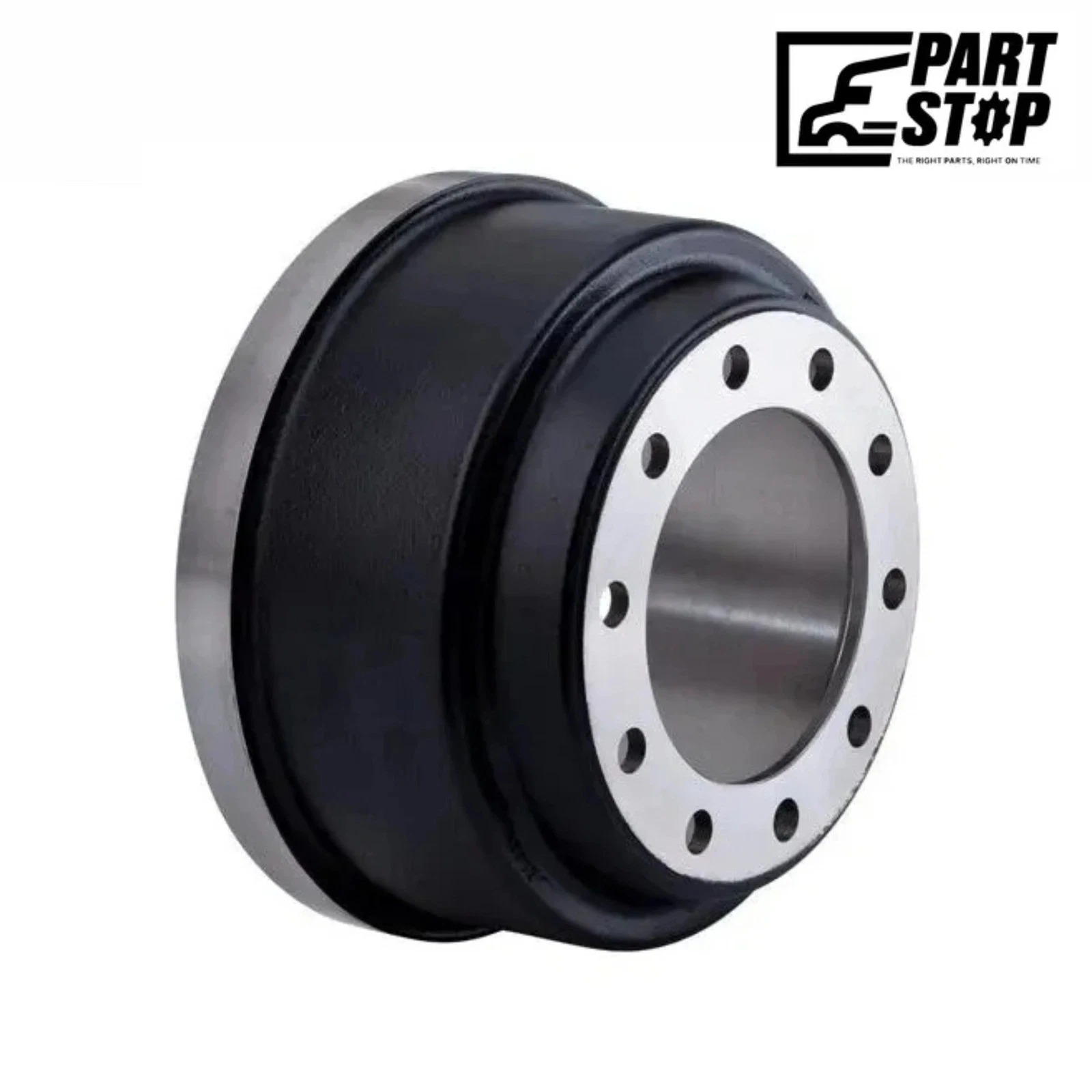
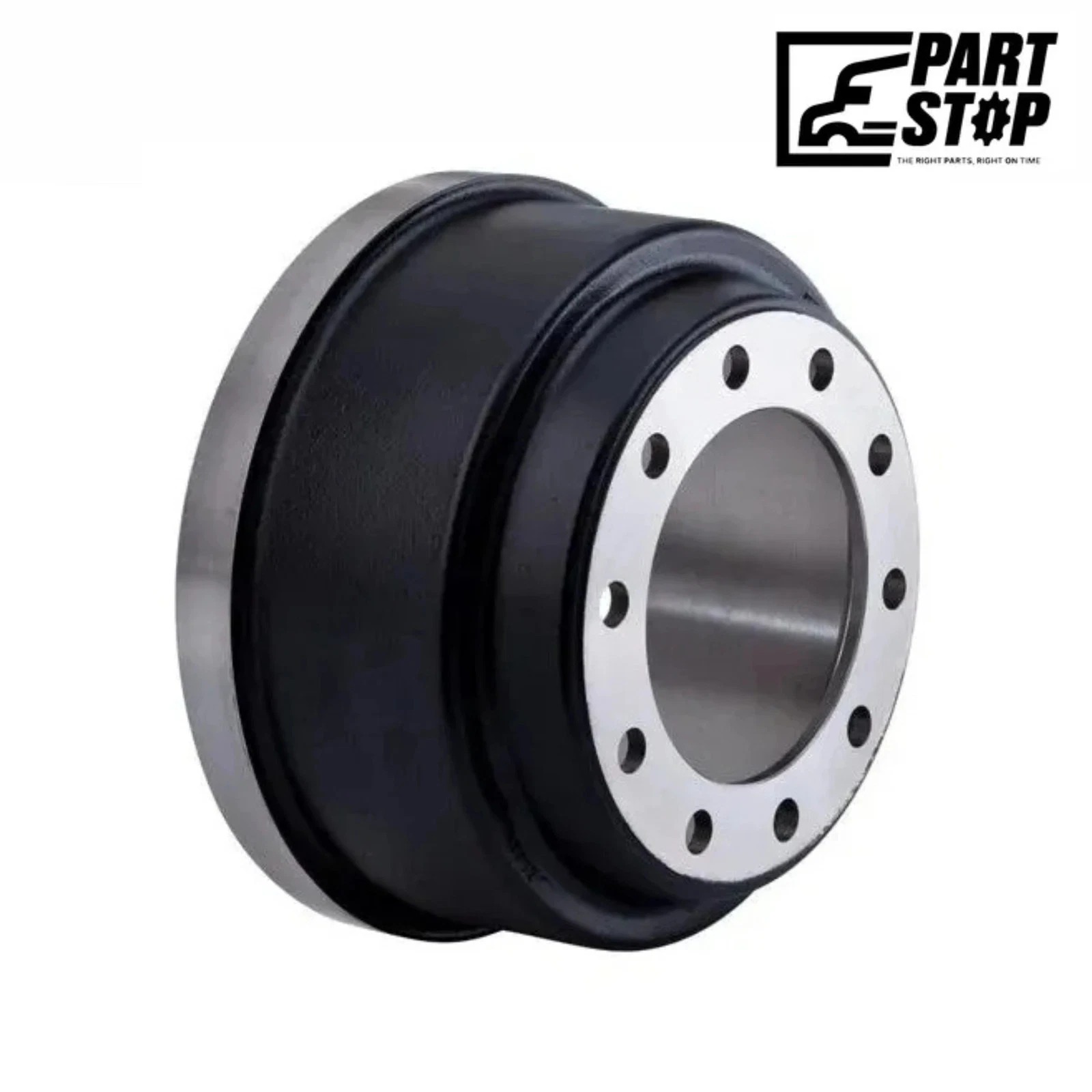
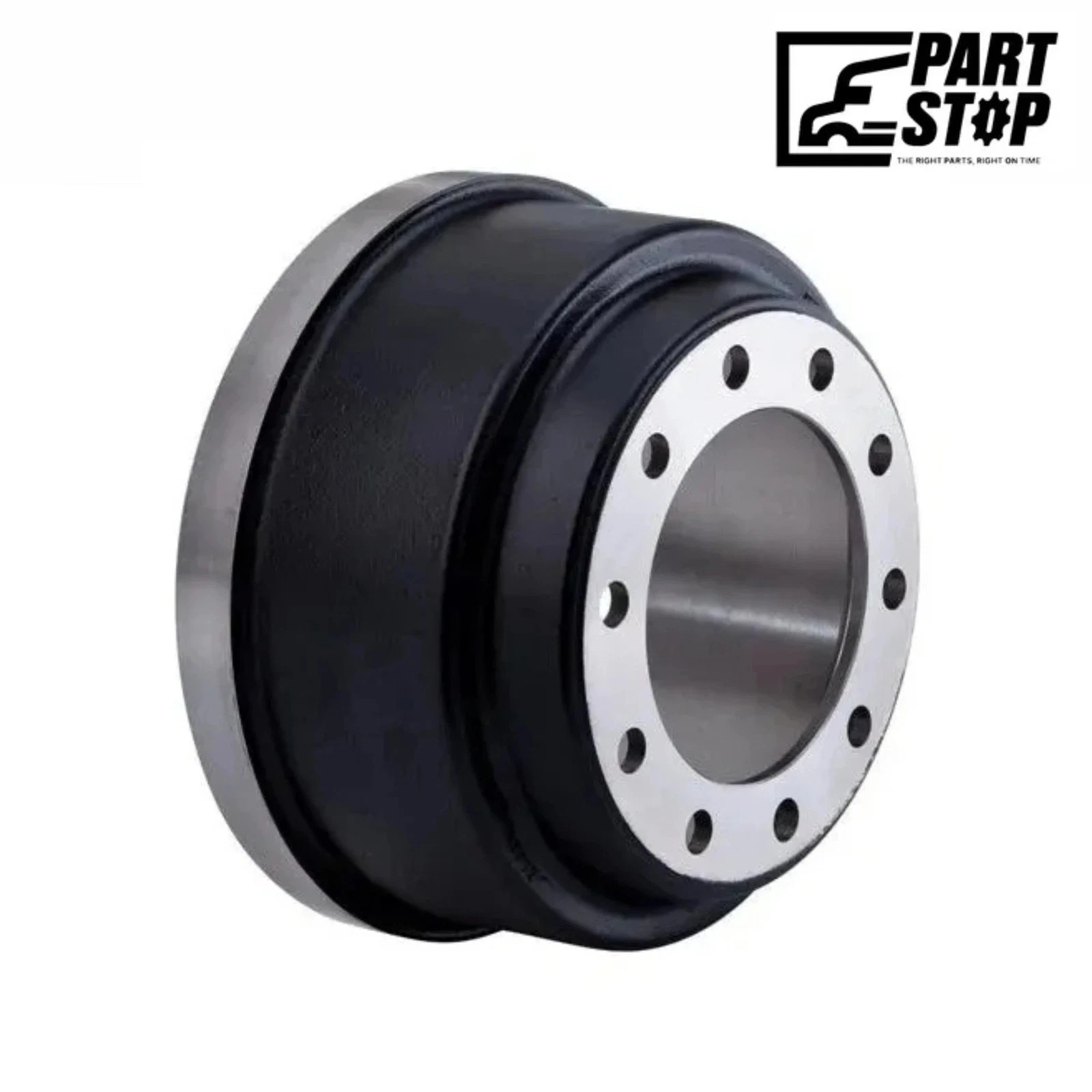
Cast into every drum face is its maximum (discard) diameter — usually 0.120" over the nominal size. At each reline, the drum gets measured; at or past that number, it's done. But diameter isn't the only failure: spider-web heat checking, deep scoring you can catch a fingernail in, blue-black hard spots and any crack through a bolt hole all condemn a drum regardless of measurement.
Symptoms from the seat: brake fade on grades, a pulsing pedal or shudder under hard stops, or one wheel end running hotter than its neighbors after the same pull. Any of those earns a measurement before the next trip, not at the next PM.
Ordering: three numbers pick a drum
Bolt count and circle, pilot diameter, and drum size (diameter × shoe width) — all stamped on your current drum or printed in the axle spec. Match those three and the drum fits; the OEM cross-reference on our listings is the confirmation. The standard heavy-duty sizes (16.5 × 7 and 16.5 × 8-5/8) cover most tandem-axle tractors and trailers, but never assume — a mismeasured pilot is a drum that wobbles on the hub.
Everything we stock is balanced from the factory. At highway speed an unbalanced drum shakes the wheel end, eats bearings and telegraphs into the cab — balanced is not optional equipment.
Replace in axle sets, reline while you're in there
One fresh drum and one worn drum across an axle brake unevenly — the truck pulls under hard stops, and an inspector who measures both sides writes it up. Do the axle pair. And put new shoes against new drums: used shoes wear a ridge and a taper that never bed correctly into a fresh friction surface. The drum-and-shoe combo is a few dollars more and stops like it should from day one.
Drums are heavy freight, so local fleets often back the service truck up to our Tacoma counter and load pallets direct. Nationwide, they ship strapped and crated — each listing shows the real cost.
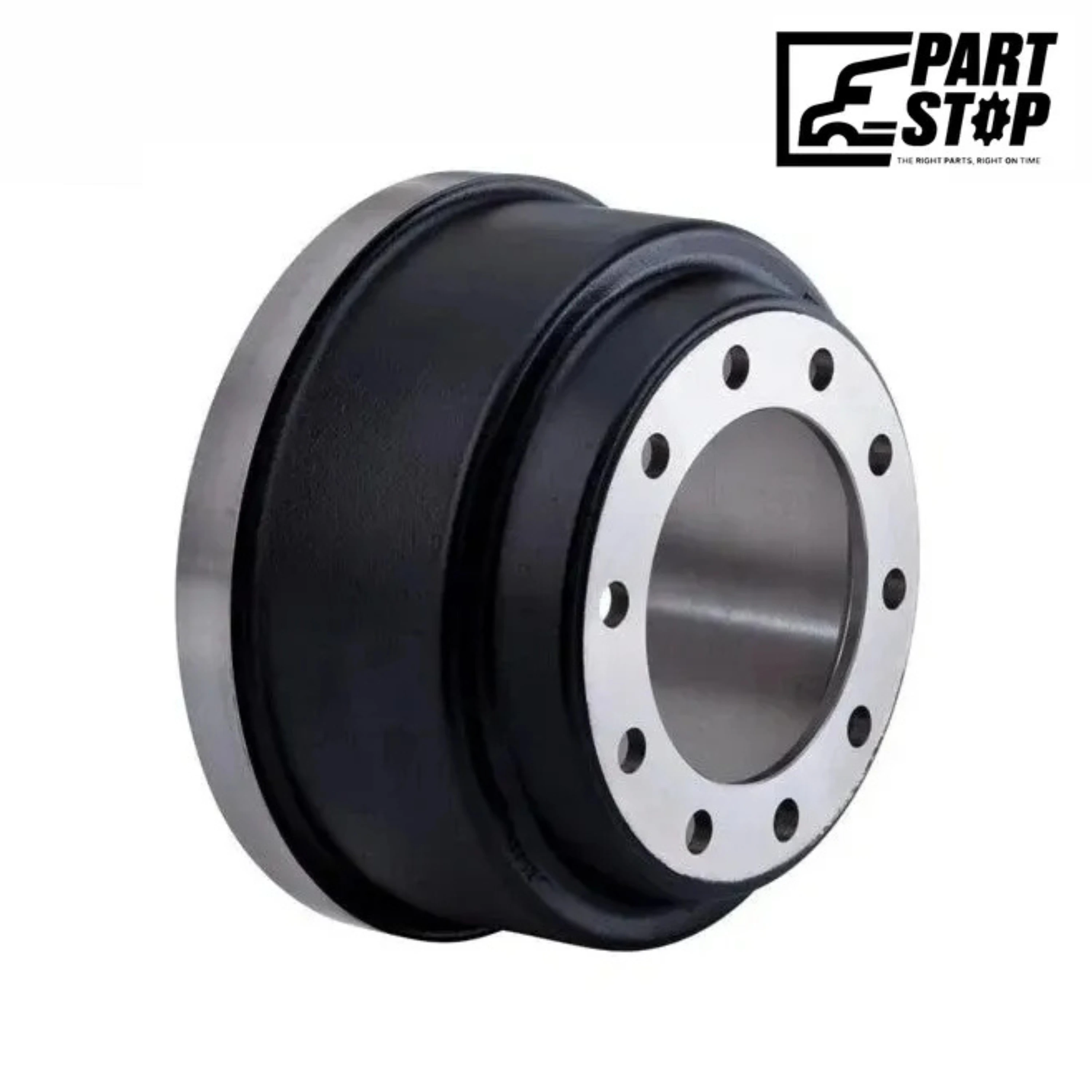
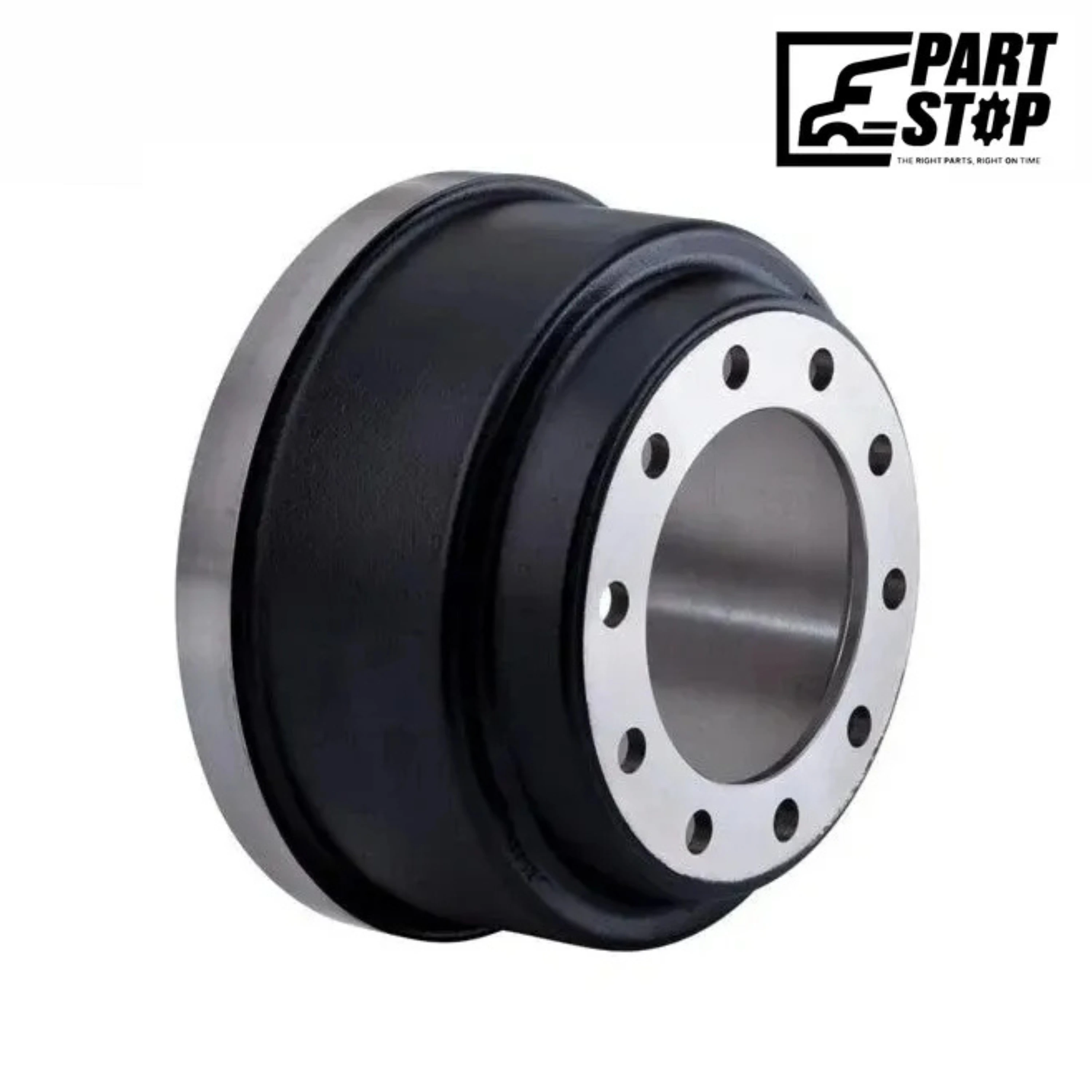
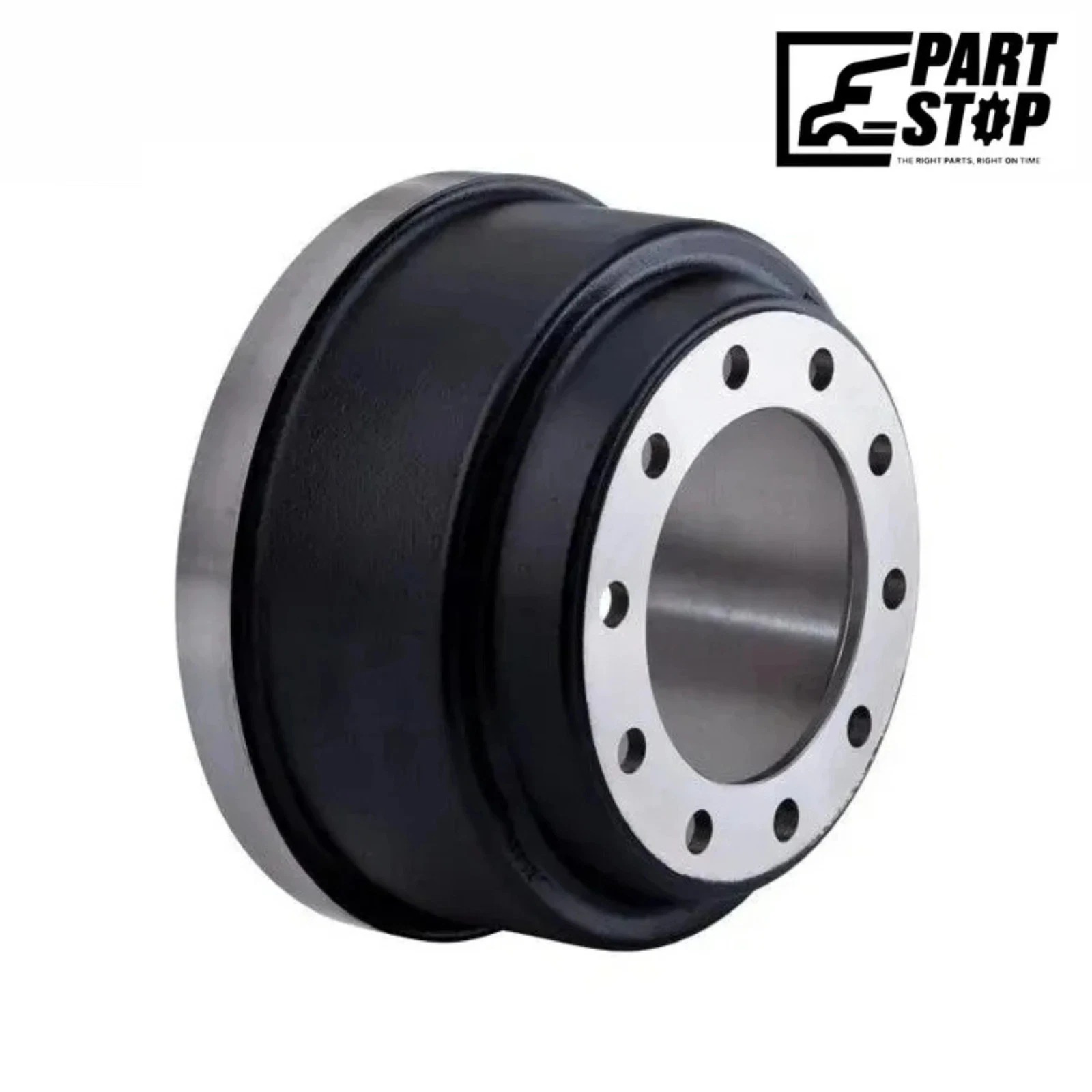
Brake Drums we stock right now
Live prices and stock from our Tacoma, WA warehouse — every part a Premium Quality aftermarket Direct Replacement with a 6+ month warranty and published cross-reference numbers.
Frequently asked questions
Can I turn (machine) a heavy truck brake drum?
Only down to the machining limit, which sits well inside the discard diameter — and by the time a drum is scored enough to need it, it's usually past worth saving. At heavy-duty prices, most shops replace rather than machine.
How many miles does a brake drum last?
Typically two to three shoe relines, but duty cycle rules everything — a mountain log-hauler eats drums a flatland van never will. Measure at every reline; the caliper, not the odometer, makes the call.
Do new drums need to be broken in?
Make a couple dozen moderate stops before you trust them with a full-weight panic stop — it beds the shoes to the new surface. Avoid long dragging brake applications the first day; glazing new friction is the classic rookie mistake.
Why is my new drum squealing?
Usually shoe chatter while the friction beds in, or a missing anti-rattle spring reinstalled wrong. If it persists past a few hundred miles — or you feel pulsing — pull the wheel and check the hardware before blaming the drum.
Not sure it fits? We check before you pay.
Run your VIN and we’ll match parts to your exact truck, or call the counter — a person who knows trucks verifies fitment by OEM number before the order ships.
More part guides
Need the part, not just the reading?
Every part below is a Premium Quality aftermarket Direct Replacement with published OEM cross-reference numbers, a 6+ month warranty and same-business-day shipping from Tacoma, WA. Not sure it fits? Run your VIN — or call and a person who knows trucks will verify fitment before you pay.