
Quick answer
Prepping a truck for Pacific Northwest weather means covering two problems at once: Puget Sound rain (a visibility and electrical issue — wipers, headlight/marker lighting, sealing against moisture) and Cascade-pass snow and cold (DEF and aftertreatment sensors, air dryer/desiccant against frozen brake lines, batteries and block heaters, and traction hardware for chain-up). Check and stock those wear items before the wet season — PartStop carries them as aftermarket direct replacements with a 6+ month warranty, same-day from Tacoma.
Between eight months of rain and the snow over Snoqualmie and the Cascade passes, Northwest trucks get tested on visibility, traction and cold-weather systems. Here's what to check — and stock — before the wet season bites.
Two climates in one region
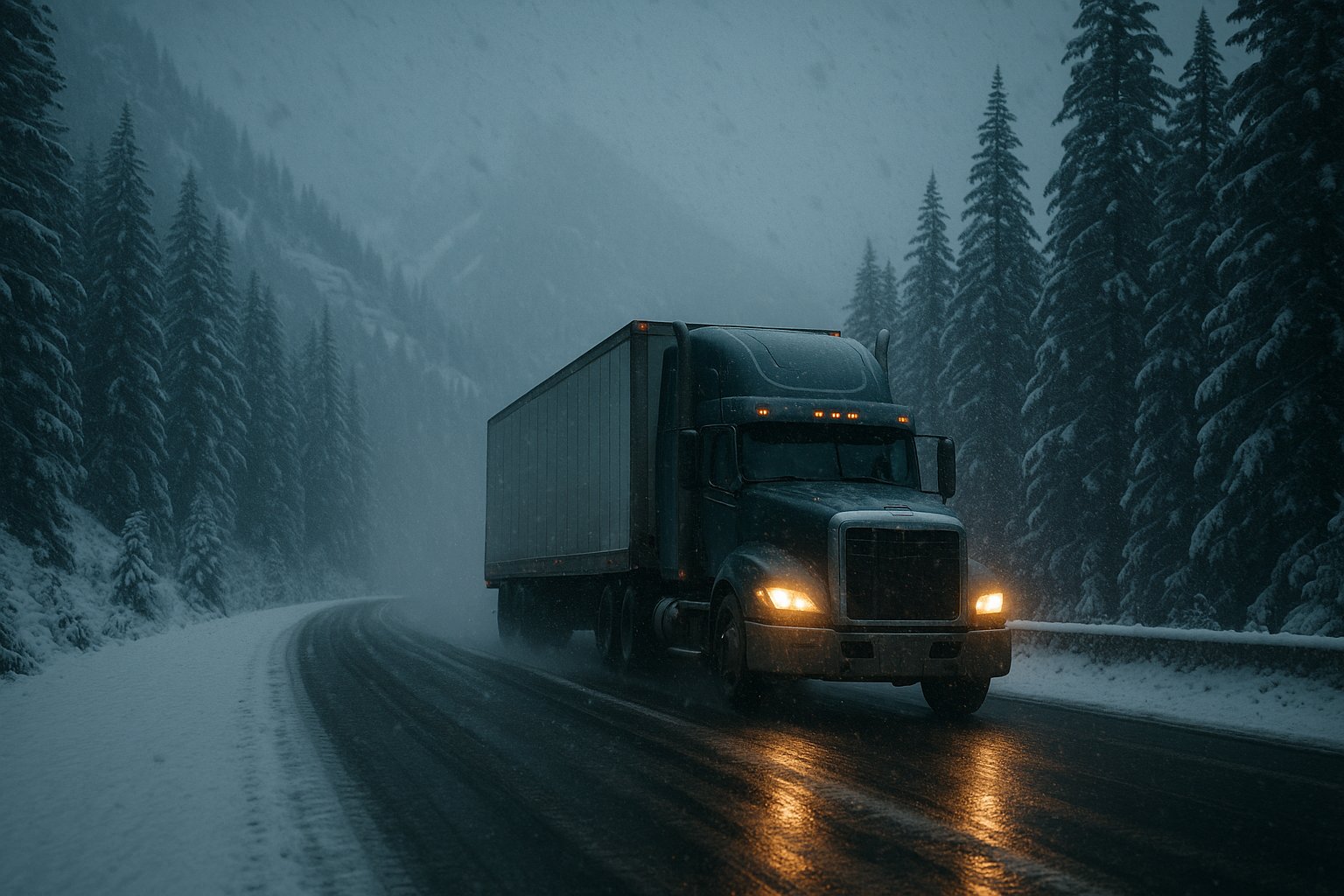
Trucks based around Puget Sound run two very different challenges. Down at sea level it's rain — a lot of it, much of the year — which is a visibility and electrical problem. Up over the Cascade passes (Snoqualmie, Stevens, White) it's snow, ice, freezing temperatures and chain-up requirements. A truck that runs I-5, I-90 or US-2 sees both, sometimes in the same trip.
Prepping for Northwest weather isn't one job; it's making sure the visibility, cold-weather and traction systems are all sound before you need them on a dark, wet pass.
Rain: it's really a visibility and electrical problem
- Wipers and washer system: worn blades and a weak washer pump turn a rainy night into a hazard. Cheap, fast to replace, and the single biggest visibility upgrade.
- Lighting: rain and road spray swallow light. Fogged or cracked headlight housings and dead marker/tail lights are both a safety issue and an inspection ticket — LED direct-replacement assemblies throw a brighter, whiter beam that cuts through spray.
- Sealing and corrosion: constant moisture works into connectors and grounds. Water intrusion behind a headlight or into a marker light is a common Northwest failure — replace cracked lenses and housings before the season, not during it.
Cold: DEF, aftertreatment and the air system
Diesel exhaust fluid (DEF) freezes at about 12°F (−11°C). The aftertreatment system is designed to thaw and use it, but cold weather is hard on the sensors and the dosing hardware around it — NOx and exhaust-temperature sensors are frequent cold-season replacements, and a sensor fault can trigger a derate that leaves you crawling over a pass.
The air brake system is the other cold-weather weak point: moisture that collects in the tanks can freeze in the lines and valves. A healthy air dryer (and a fresh desiccant cartridge) is what keeps water out of the system — the cheapest insurance against frozen brakes there is.
Starting and staying warm
- Batteries and charging: cold cuts cranking power right when you're asking the most of it. Test batteries, terminals and the alternator before the first freeze.
- Coolant and heaters: verify coolant condition and concentration, and check that block/coolant heaters and their cords work — a plugged-in truck starts and warms far easier on a frozen morning.
- Hoses and belts: cold makes marginal rubber brittle. A coolant hose or belt that's cracking is far cheaper to replace in the shop than on the shoulder of a pass.
Traction and chain-up
Washington posts chain requirements on the mountain passes through the season, and enforcement is real. Beyond the chains themselves, make sure the hardware that keeps a truck controllable in snow — brakes in adjustment, working ABS sensors, sound suspension and steering — is all in order. A truck that can't stop or track straight on ice is a problem no chain fixes.
Stock it locally before the season
PartStop is a Tacoma parts counter and warehouse (1616 E 26th St, Mon–Sat 6 AM–8 PM) stocking the wet-and-cold-season wear items — wipers, lighting, NOx and temp sensors, air dryers and cartridges, hoses, belts, batteries-adjacent electrical — as premium-quality aftermarket direct replacements with a 6+ month warranty. Free local delivery within 30 miles of Tacoma, same-day nationwide shipping everywhere else. Search by VIN or cross-reference number, or call (253) 600-1351 and we'll verify fitment before the weather turns.
Frequently asked questions
What should I check on a semi truck before Northwest winter?
Wipers, washer pump and headlight/marker lighting (rain visibility); NOx and exhaust-temp sensors and the DEF/aftertreatment hardware (cold can trigger a derate); the air dryer and desiccant cartridge (keeps water out of the brake lines so they don't freeze); batteries, charging and block heater; and brakes/ABS/suspension for chain-up traction.
Does DEF freeze in cold weather?
Yes — diesel exhaust fluid freezes at about 12°F (−11°C). The aftertreatment system is designed to thaw and use it, but cold is hard on the NOx and exhaust-temperature sensors around it, and a sensor fault can cause a derate. Those sensors are frequent cold-season replacements.
How do I make sure a part fits my truck?
Use the free VIN lookup at partstop.net/vin (parts verified against your truck's build data), match the OEM / cross-reference number from your old part, or call (253) 600-1351 — fitment is checked before you buy.
How fast does PartStop ship?
In-stock orders placed before the daily cutoff ship the same business day (Monday–Saturday) from Tacoma, WA. Standard delivery typically takes ~3 business days, free on orders over $100; overnight is available on most items as an expedite surcharge (2× the standard rate, or $50–$350 by order value when standard ships free).
Shop related parts
Premium-quality aftermarket direct replacements — nationwide same-day shipping, 6+ month warranty.
Need the part, not just the reading?
Every part below is a Premium Quality aftermarket Direct Replacement with published OEM cross-reference numbers, a 6+ month warranty and same-business-day shipping from Tacoma, WA. Not sure it fits? Run your VIN — or call and a person who knows trucks will verify fitment before you pay.