
The signs: cupped tires, oil streaks, and a truck that keeps bouncing
The classic test still works: push down hard on the corner — one rebound and settle is healthy, a bounce that keeps going means the shock is done. But the tires tell you first: scalloped, cupped wear around the tread of a steer tire is an uncontrolled axle hopping, and it's usually a $100 shock destroying an $600 tire. Visual checks close the case: oil-wet shock bodies (mist is fine, streaks are not), dented tubes, and worn or oval bushing eyes.
On air-ride tractors and cabs the shock is doing even more of the damping work than on spring suspensions — a dead shock on air-ride shows up as porpoising at highway speed and a cab that never stops rocking.
Matching shocks: position, length and mounts
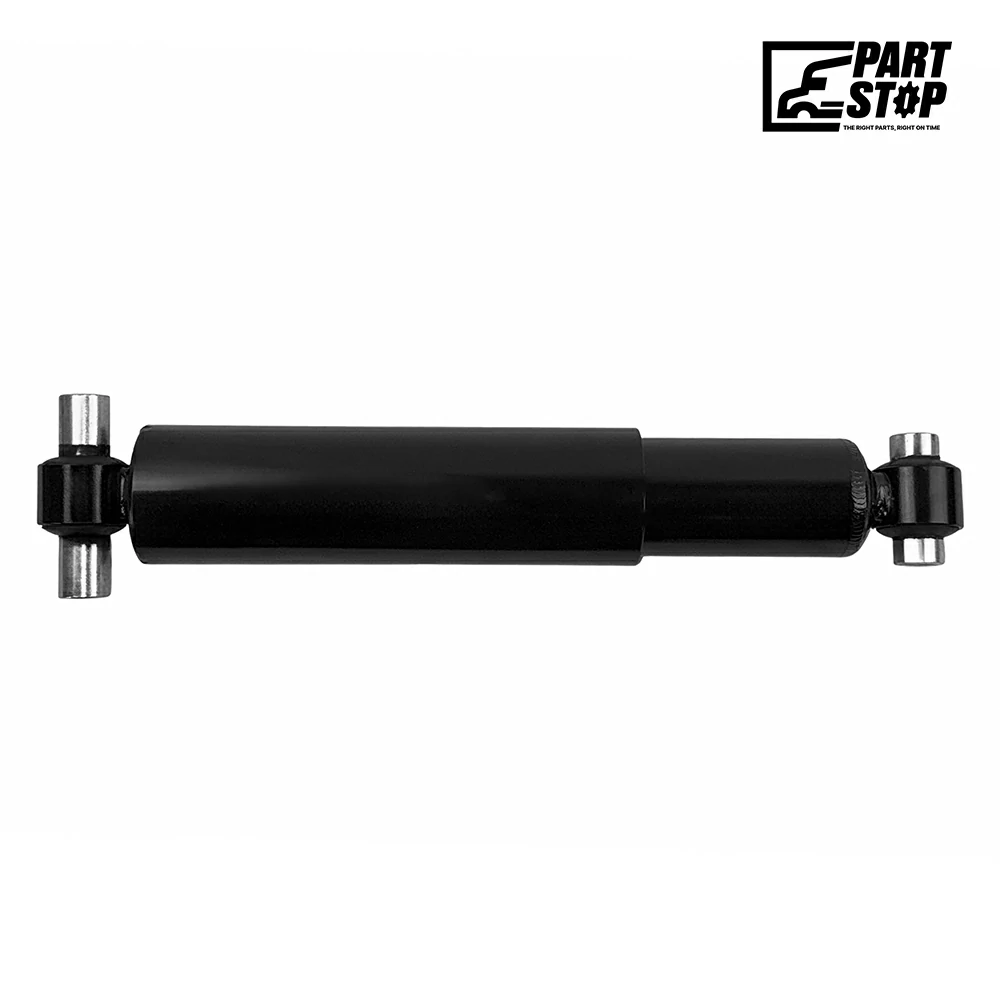
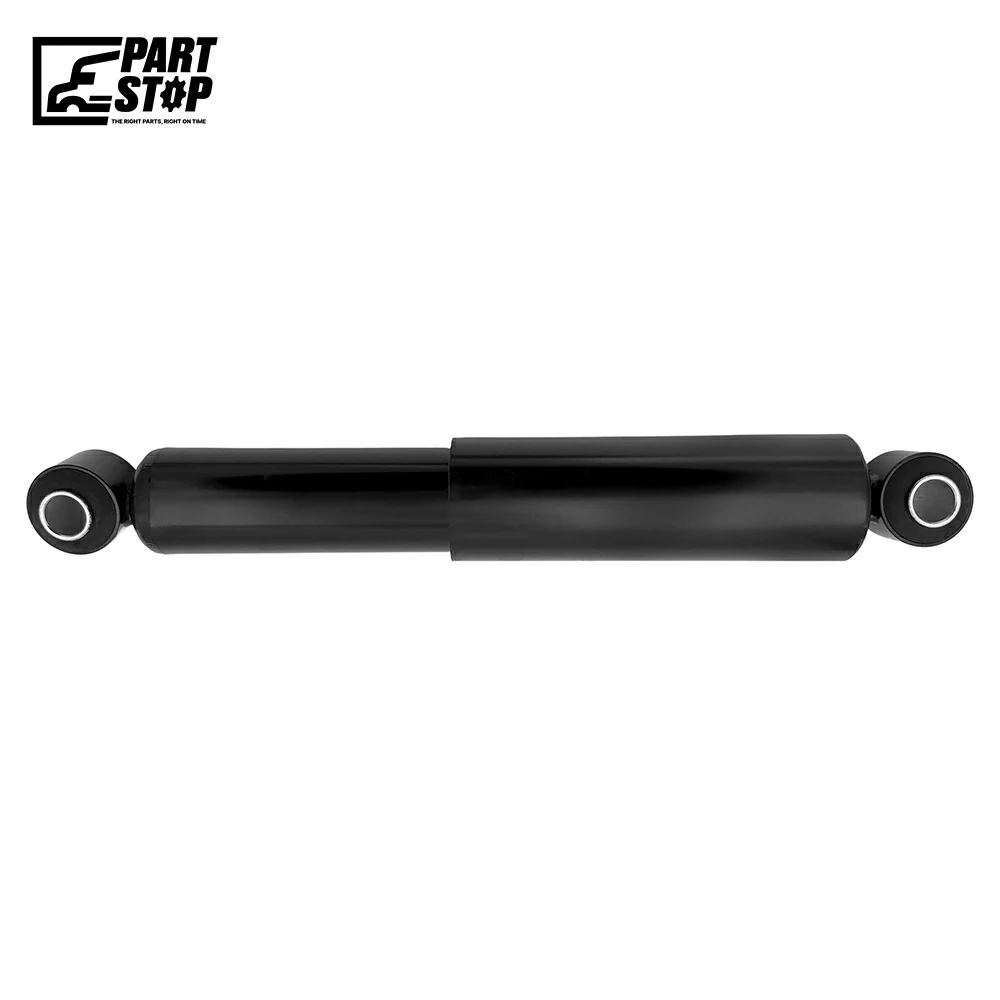
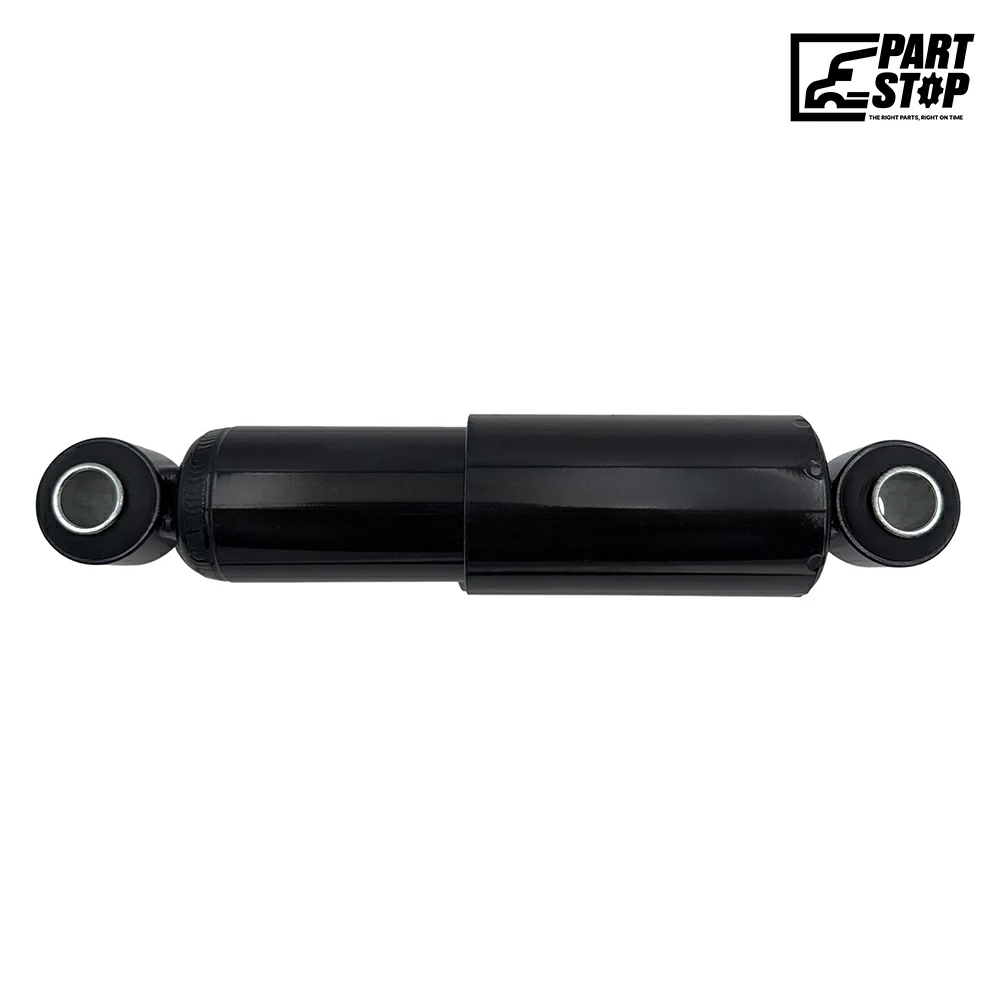
Shocks match by axle position (steer, drive, cab, trailer), extended and compressed length, and mount style — eye-ring or stud, and the bushing size in the eye. Our listings carry the OEM cross-references (Gabriel, Monroe, Sachs equivalents) so the number on your old shock's sticker maps straight across. If the sticker's gone, measure both lengths and photograph the mounts; that's enough to match.
Replace in axle pairs, always. One new and one dead shock across an axle gives you two different damping rates side to side — it steers strangely in crosswinds and wears the fresh shock's bushings out early.
Installation notes worth knowing
Torque the mounts with the suspension at ride height, not hanging at full droop — bushings clamped at droop are pre-twisted and tear in months. New gas-charged shocks come compressed and strapped; cut the strap only when mounted. And while the wheel's off, check the shock bracket welds and the torque of everything nearby: a dead shock has been shaking that corner loose for months.
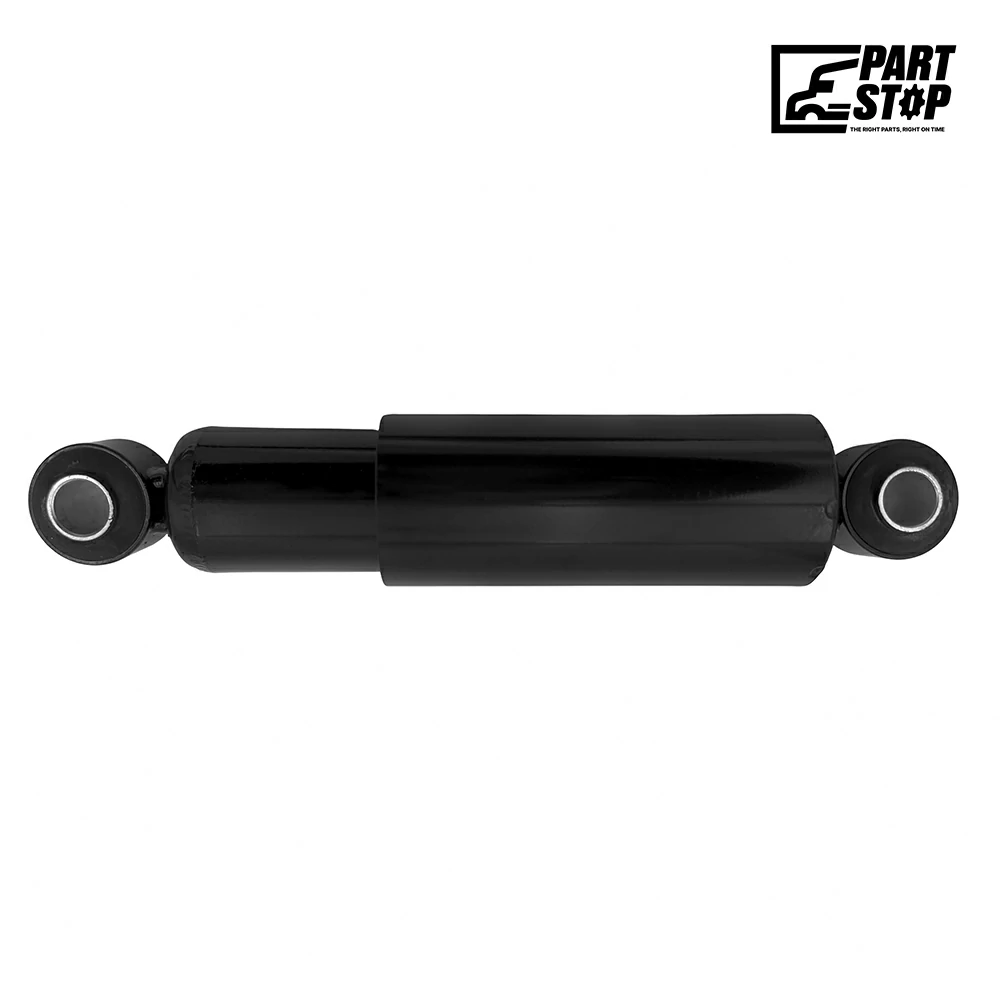
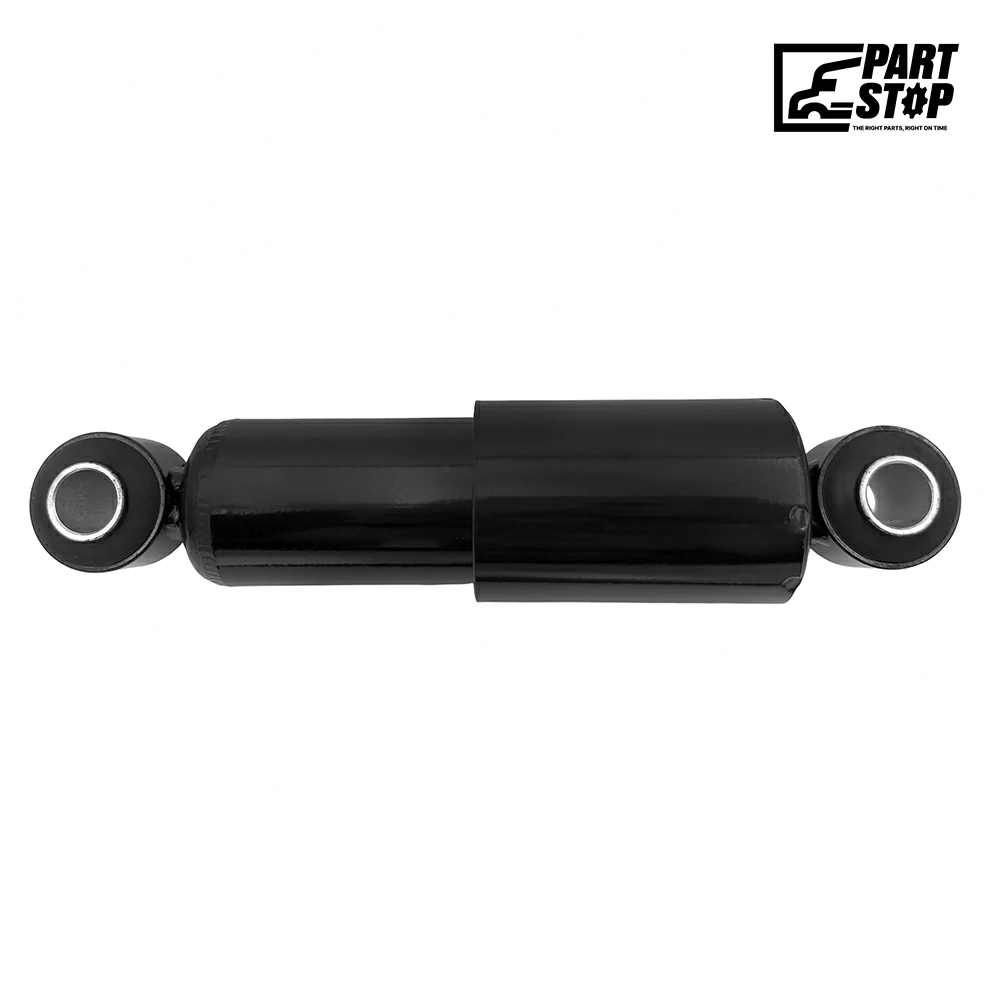
Shock Absorbers we stock right now
Live prices and stock from our Tacoma, WA warehouse — every part a Premium Quality aftermarket Direct Replacement with a 6+ month warranty and published cross-reference numbers.
Frequently asked questions
How long do semi truck shocks last?
Roughly 100–150k miles on highway duty, far less in vocational service or on Pacific Northwest frost-heave roads. The tire wear pattern and the bounce test tell the truth regardless of the odometer.
Can I drive with a leaking shock?
It'll roll, but every mile costs you: tire cupping, bracket fatigue and wheel-end stress add up faster than the price of the shock. Oil streaks down the body mean the damping is already mostly gone.
Do I need an alignment after replacing shocks?
No — shocks don't set geometry. But if the old shocks cupped the steer tires, the ride will still feel rough on those tires; rotate or replace them and the truck comes back to itself.
Are gas shocks better than hydraulic for trucks?
Gas-charged shocks resist fade on rough roads because the pressurized oil can't foam. For a working truck they're the standard answer; the listings state the type so you can match or upgrade what came off.
Not sure it fits? We check before you pay.
Run your VIN and we’ll match parts to your exact truck, or call the counter — a person who knows trucks verifies fitment by OEM number before the order ships.
More part guides
Need the part, not just the reading?
Every part below is a Premium Quality aftermarket Direct Replacement with published OEM cross-reference numbers, a 6+ month warranty and same-business-day shipping from Tacoma, WA. Not sure it fits? Run your VIN — or call and a person who knows trucks will verify fitment before you pay.