
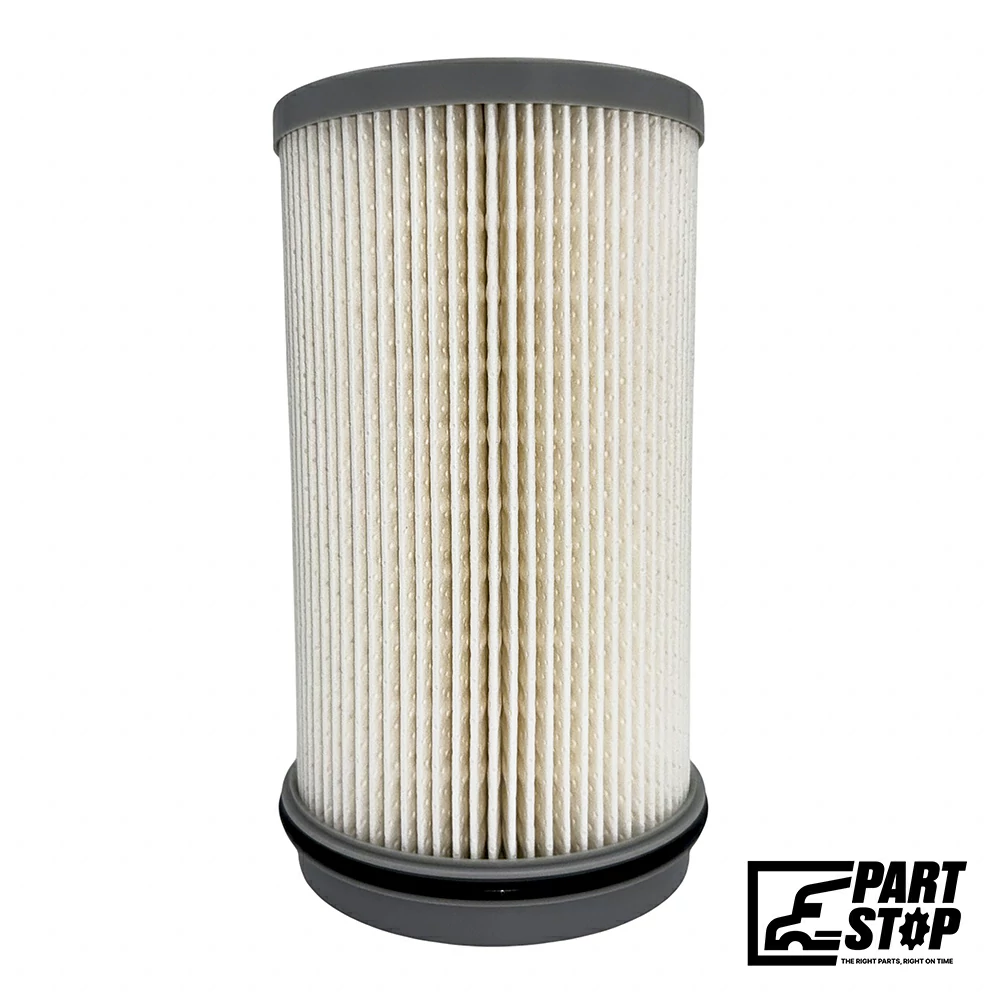
Why water shows up in diesel — and what it does
Every tank breathes: warm moist air enters as fuel is consumed and condenses on cold tank walls overnight. Add wet fuel from a low-turnover station and water accumulates at the tank bottom, where the pickup lives. Downstream it pits injector tips at common-rail pressures, feeds microbial growth (the black slime that plugs filters), and in winter freezes inside the filter element — the classic dead-truck-at-5-AM.
The separator catches water by spinning and coalescing it out of the fuel stream into a collection bowl. Full bowl = water passing through. That's the entire failure mode: not draining it.
The drain habit and the change interval
Crack the drain valve at every fuel stop in winter, weekly in summer — until clear fuel runs. Ten seconds. If you're draining a lot of water repeatedly, the message is your fuel source, not the filter. Change the element on the same schedule as your fuel filters (or when the water-in-fuel light starts nagging), and always after any suspected bad-fuel event.
Match elements by micron rating and the OEM cross-reference on the listing — the common Davco, Fleetguard and Racor-style applications are covered, and heated units matter in the Northwest: a 12-volt heated separator is the difference between gelling and going.
Symptoms of a separator crying for help
Water-in-fuel light (believe it), hard starts on cold mornings, surging under load, and a bowl that's cloudy or full — all separator talk. After replacing an element, prime per the engine's procedure; airlocking the fuel system turns a five-minute filter change into an hour of cranking. And carry a spare element in winter: a gelled filter swaps in a truck stop parking lot, but only if you have one.
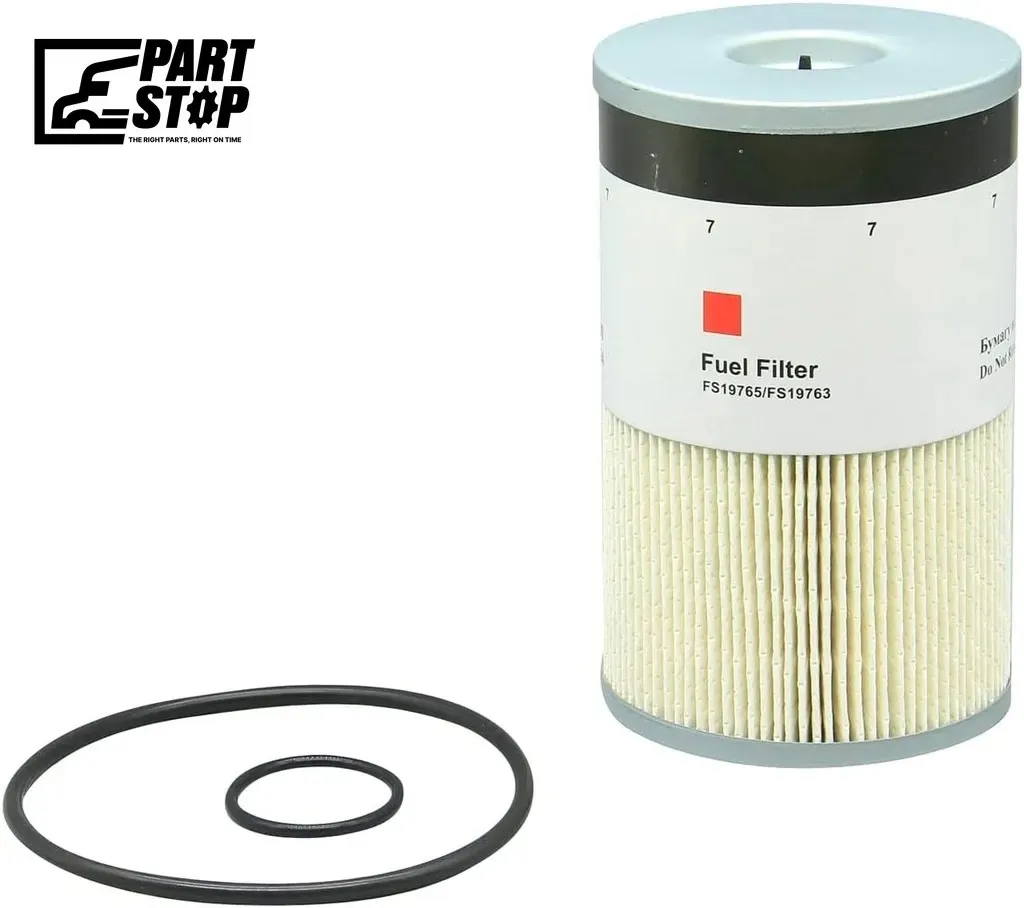
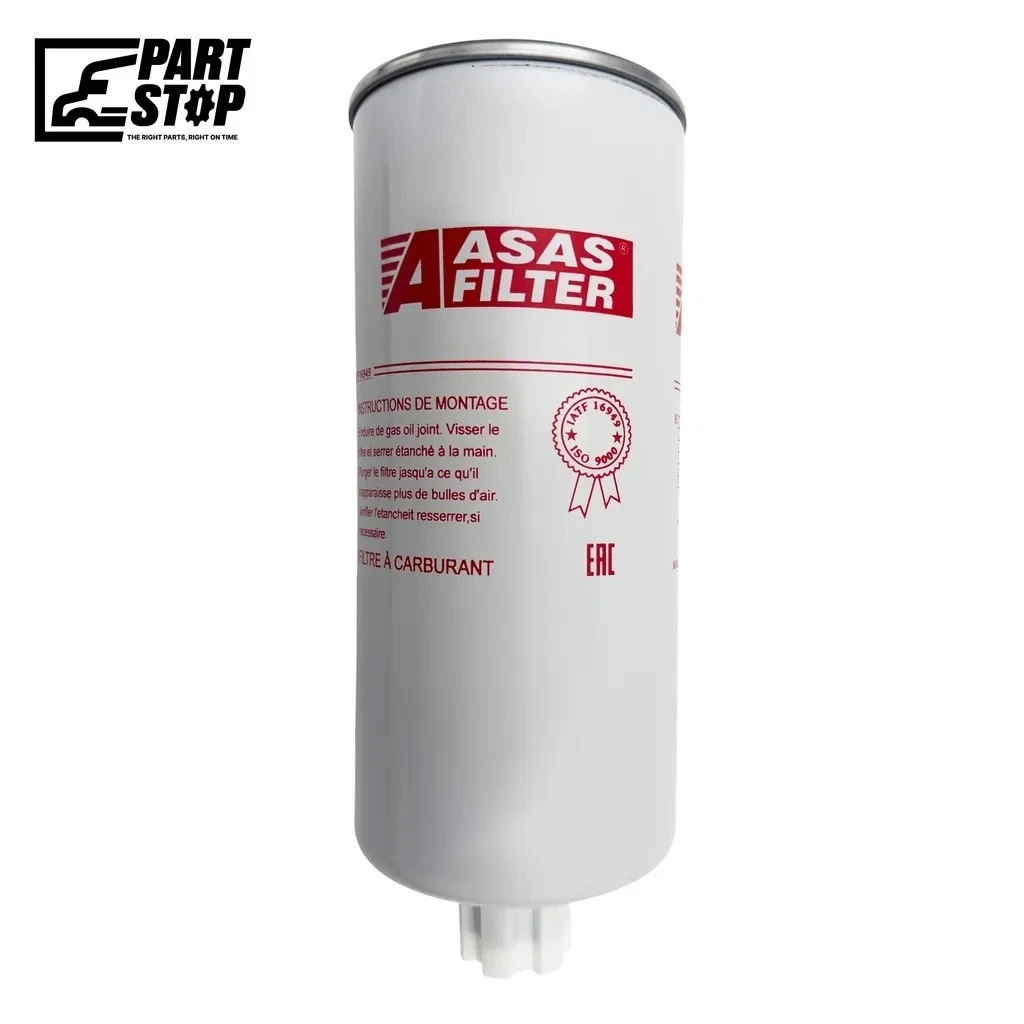
Water Separators we stock right now
Live prices and stock from our Tacoma, WA warehouse — every part a Premium Quality aftermarket Direct Replacement with a 6+ month warranty and published cross-reference numbers.
Frequently asked questions
How often should I drain the water separator?
Winter: every fuel stop — it takes ten seconds. Summer: weekly. If you're getting significant water every drain, change fuel suppliers before you change more parts.
What does the water-in-fuel (WIF) light actually mean?
The sensor in the bowl is touching water — the bowl is at capacity and water may already be passing downstream. Drain it now, and if the light returns quickly, change the element and inspect the tank.
Do I need a heated fuel-water separator?
If the truck sleeps outside anywhere that freezes — yes. Heated units keep the collected water and the fuel wax from icing the element, which is the #1 cold-morning no-start in the Northwest.
Diesel 911 / anti-gel — friend or crutch?
Emergency de-icers work for getting a gelled truck moving; they're not a maintenance plan. Winterized fuel, a drained separator and a fresh element beat additives every time.
Not sure it fits? We check before you pay.
Run your VIN and we’ll match parts to your exact truck, or call the counter — a person who knows trucks verifies fitment by OEM number before the order ships.
More part guides
Need the part, not just the reading?
Every part below is a Premium Quality aftermarket Direct Replacement with published OEM cross-reference numbers, a 6+ month warranty and same-business-day shipping from Tacoma, WA. Not sure it fits? Run your VIN — or call and a person who knows trucks will verify fitment before you pay.