
Deer strikes are not spread evenly through the year. They cluster into about six weeks, they cluster into about two hours a day, and the damage that ends a trip is rarely the sheet metal. Here is what the collision data says and what it means for a working truck.
Half the year's strikes happen in the autumn
Deer-vehicle collisions are a seasonal event, not a background risk. Insurers and state wildlife agencies put the peak squarely in October and November, and roughly half of the yearly total lands in the autumn alone. During the rut — the mating season that runs from late October into early December — reported collision frequency rises three to four times over the rest of the year, because deer movement itself climbs by around half.
The tightest window is narrower still. State agencies repeatedly identify mid-November, and specifically the week of the 11th through the 17th, as the worst stretch of the year for deer-driver crashes.
The scale is not small. Industry figures put annual animal-collision claims in the region of two million, with insured losses above a billion dollars a year. For a fleet, the relevant number is not the national total — it is that your exposure is concentrated into about six weeks.
The clock matters more than the calendar
Within those weeks, the risk is concentrated again by time of day. Collisions occur roughly fourteen times more often in the two hours after sunset than in the two hours before it. Deer move at dusk, drivers are running on low beams into a dark treeline, and reaction distance collapses.
The autumn clock change sharpens it further: about one in ten of the year's collisions falls in the two-week period around it, because the evening commute suddenly moves into the dusk window that was safe the week before.
If your operation runs nights through farm or forest country in November, you are not exposed to an average risk. You are exposed to the peak of the peak.
- October–November: the seasonal peak, ~50% of the year in autumn
- 11–17 November: statistically the worst week
- Two hours after sunset: ~14x the pre-sunset rate
- The fortnight around the clock change: ~10% of the annual total
What a strike actually destroys
The photographs make it look like a body-panel problem. On a Class 8 truck it usually is not. Behind the grille sits the cooling stack — A/C condenser in front, charge air cooler behind it, radiator behind that — and all three are thin aluminium built for airflow, not impact. A strike that leaves the hood repairable can still open a radiator or split a CAC.
That is what turns an incident into a stranding. A dented bumper drives home. A punctured charge air cooler does not, and neither does a radiator dumping coolant on the shoulder in the dark. The tow and the recovery are usually the largest line on the invoice, ahead of the parts.
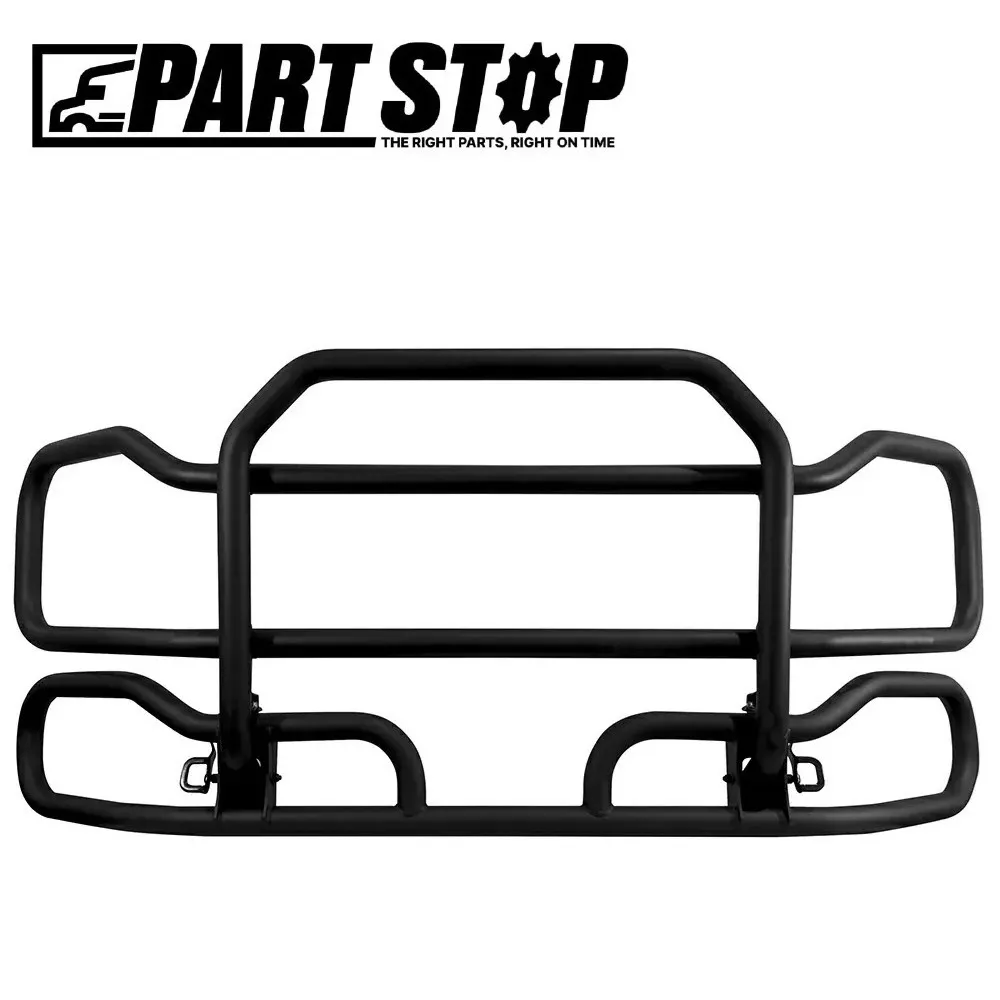
It is also why guards are bar-style and mounted forward. The job is not to protect the paint. It is to keep the animal out of the cooling package and to spread the load into the frame rather than into a radiator support.
What a guard does and does not do
A deer guard is a physical shield ahead of the grille. Against a mid-size animal at highway speed it does what it was built to do: deflects the mass away from the cooling stack and puts the load into mounting brackets tied to the frame. Fleets that run nights and rural routes fit them for that single reason.
It is not armour and it is not a substitute for slowing down at dusk. It will not save you from a large animal met square at speed, and it does not change stopping distance. Treat it as damage limitation on an event you cannot always avoid, not as permission to run harder through the dark.
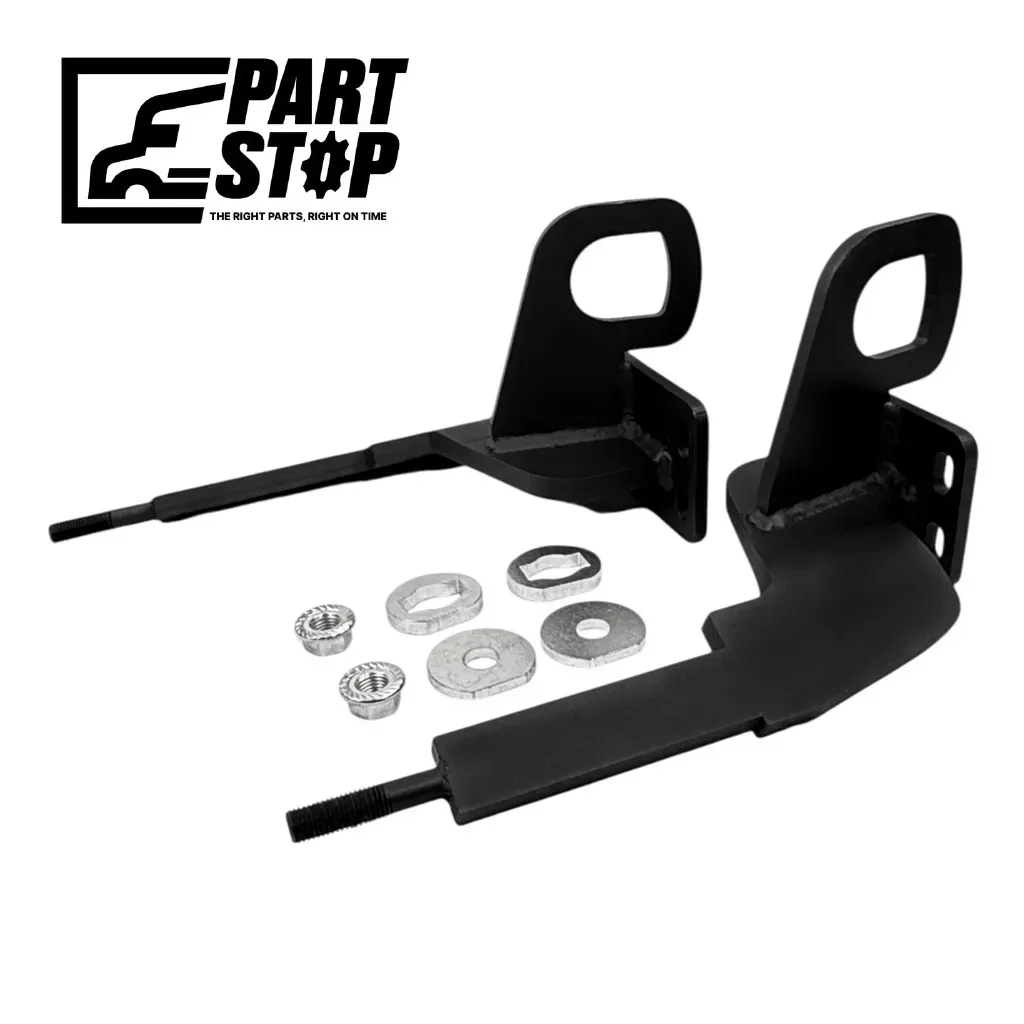
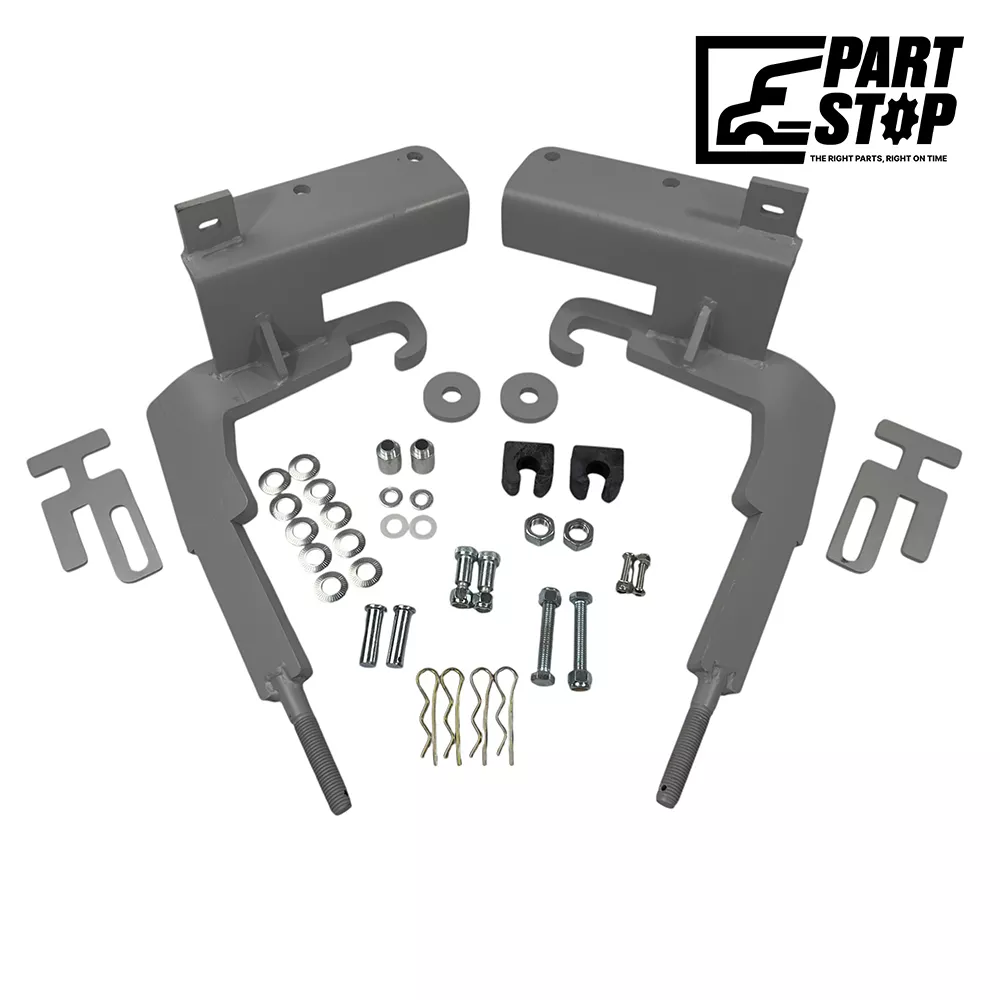
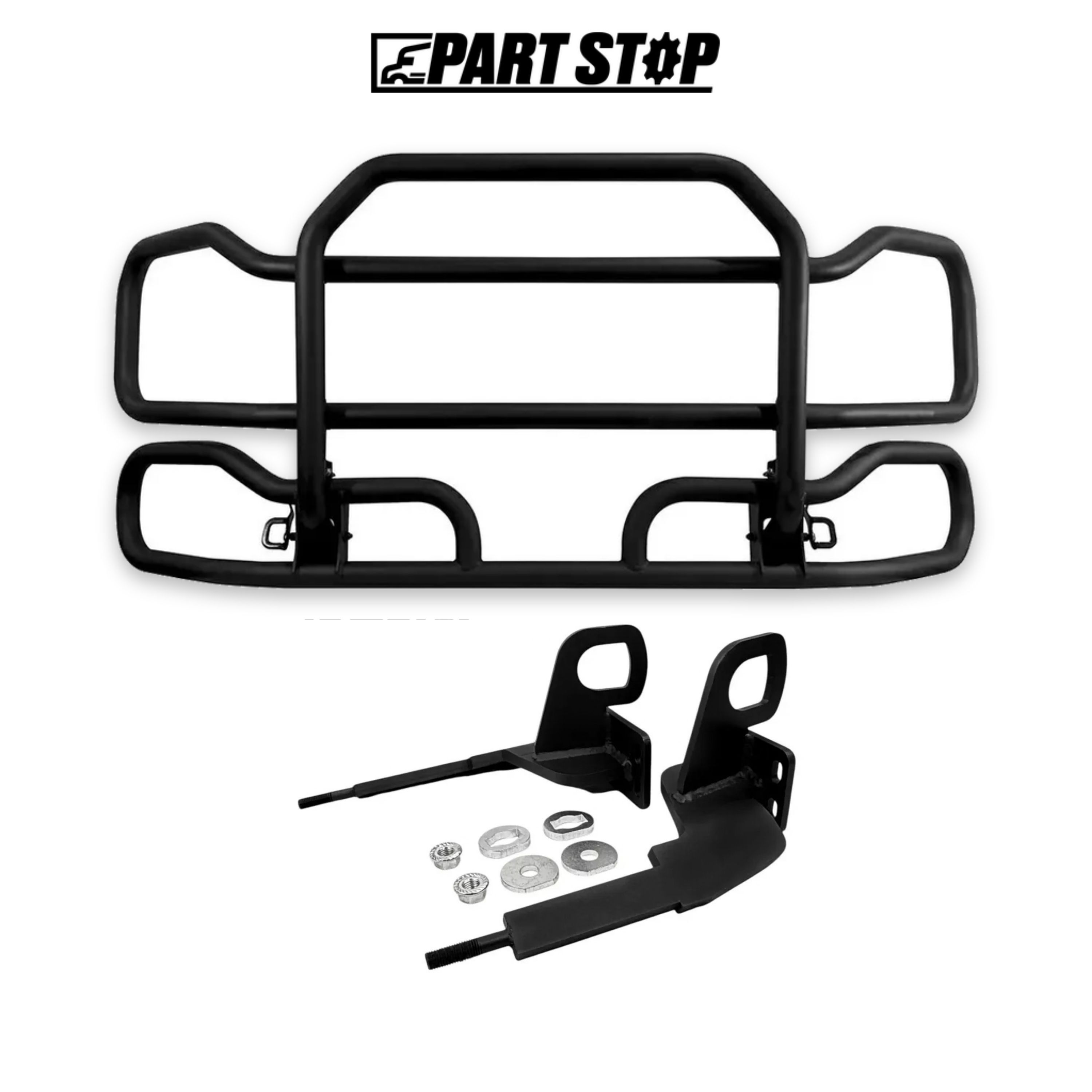
One point worth knowing before you shop: the guard and the mounting bracket are separate parts, and the bracket is what makes it truck-specific. A bar that spans a standard width can suit several trucks; the bracket that ties it to your frame will not.
Fit it before the season, not during it
A full-width guard is a 91-inch steel bar weighing around 75 lb. That is a two-person job with the hood up, and it is freight to get it to you, not a parcel — so the lead time is measured in days, not hours. Ordering in the second week of November, with the truck already booked solid, is how a guard ends up sitting in a shop corner until spring.
The sensible window is late summer through September. The bar arrives, it goes on during a scheduled service rather than an emergency one, and it is on the truck before the rut starts moving deer across the road at dusk.
In stock at PartStop
Shop these deer guards & brackets
Premium-quality aftermarket direct replacements, in stock and shipped same day from Tacoma with a 6+ month warranty.
Fleet pricing
Running a fleet? Buy in packs and save
Chambers are a wear item — stock the shelf and a torn diaphragm is a quick swap, not a parked truck. 2-, 4- and 10-packs drop the per-unit price.
Also Available As a Deal
Get the Complete Kit
Freightliner Cascadia Deer Guard + Bracket KIT
$1,291.49
Shop related parts
Premium-quality aftermarket direct replacements — nationwide same-day shipping, 6+ month warranty.
Need the part, not just the reading?
Every part below is a Premium Quality aftermarket Direct Replacement with published OEM cross-reference numbers, a 6+ month warranty and same-business-day shipping from Tacoma, WA. Not sure it fits? Run your VIN — or call and a person who knows trucks will verify fitment before you pay.