
Freightliner Cascadia Coolant Tanks 2008–2026
Coolant surge and overflow tanks — direct-replacement reservoirs matched by OEM number and mounting, the fix when a cracked tank keeps dropping the coolant level. The Cascadia is the best-selling Class 8 truck in North America, which makes its body and service parts the most-searched in the aftermarket.
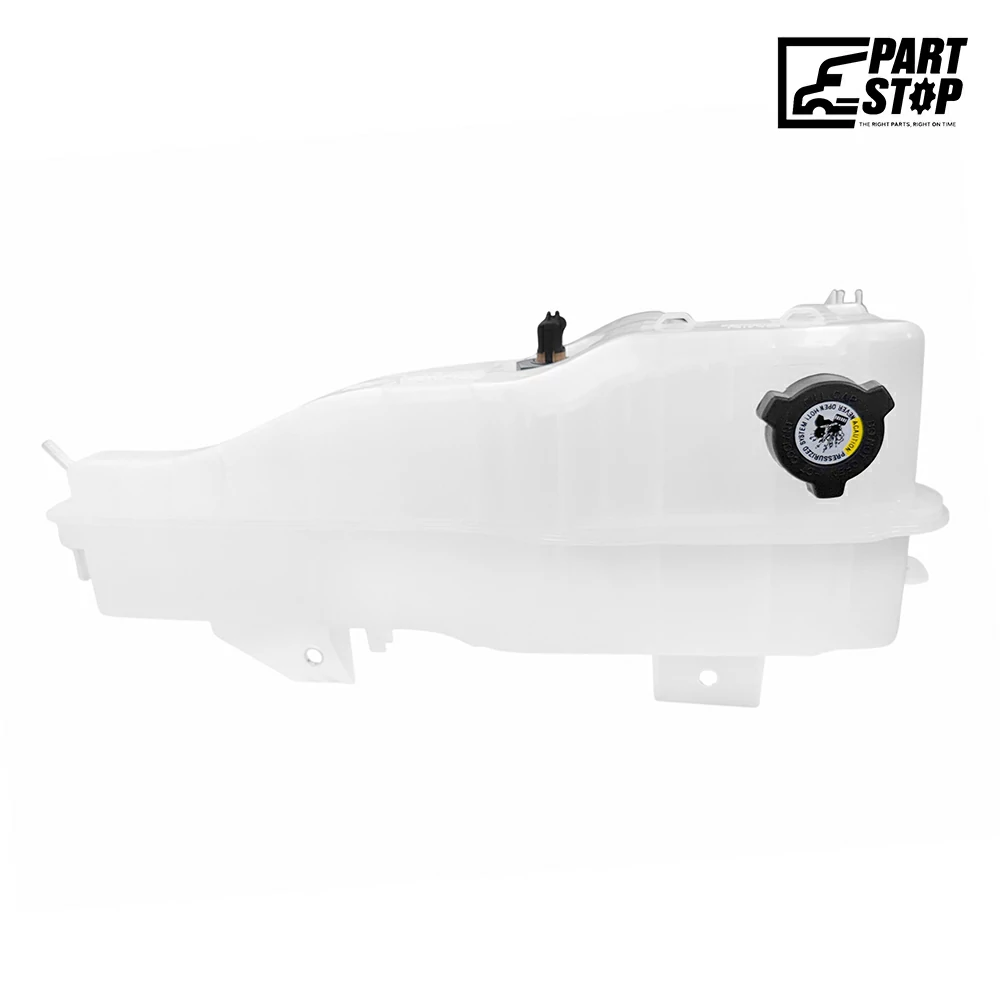
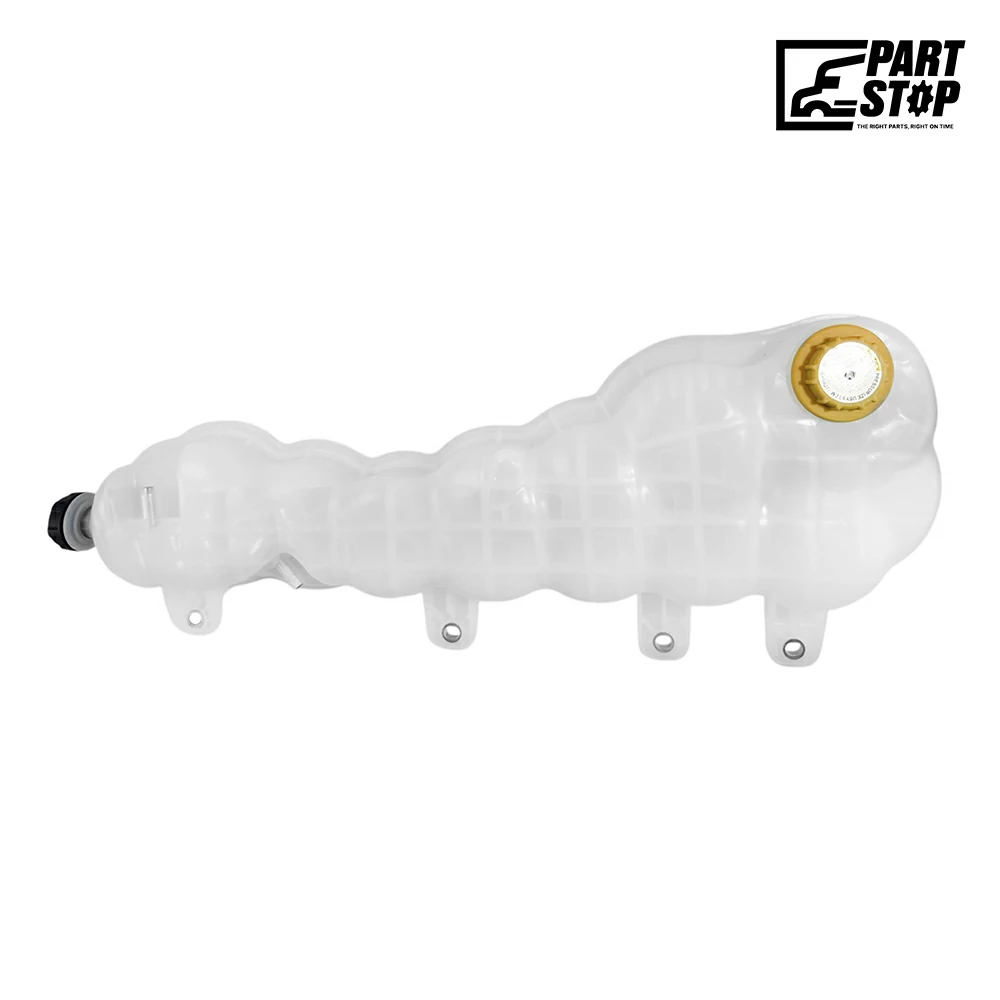
Freightliner Cascadia Coolant Tanks (2008–2026) — what we stock
The coolant surge tank, also called the expansion or overflow tank, is where the system parks coolant as it heats and takes it back as it cools, and where trapped air separates out instead of going around with the flow. It is plastic, it lives in engine heat for years, and it fails in three ordinary ways: a hairline crack at a moulded seam, a cap that stops holding pressure, and a level sensor that reads wrong. On a Freightliner Cascadia the crack usually shows first as a stain down the side of the tank rather than a puddle, because the coolant weeps and bakes off before it reaches the ground.
The Cascadia is the best-selling Class 8 truck in North America, which makes its body and service parts the most-searched in the aftermarket.
How to pick the right part for your Cascadia
Order by the OEM number, because tanks are not interchangeable even between trucks that look identical. The reservoirs we stock run 24 to 36 in long and 12 to 23 in tall, and the mounting straps, hose spigot positions and sensor bore all change between part numbers. Check whether your tank carries a level sensor and whether the cap is a pressure cap or a plain filler, because a tank without the sensor bore will light your dash even when the coolant is right. If the plastic is chalky and crazed anywhere, replace it now rather than after the next pressure test cracks it open.
Why buy coolant tanks from PartStop
Every part on this page is Premium Quality aftermarket — a Direct Replacement matched to factory mounting points and backed by a 6+ month warranty. We publish the OEM cross-reference numbers right on the listing (most sellers hide them), we verify fitment by OEM number or VIN before you buy, and orders placed on business days ship same day from our warehouse in Tacoma, WA. Tanks are stocked and ship same business day, because a truck losing coolant is a truck heading for a head gasket. If anything about fitment is unclear, call the counter at (253) 600-1351 — a person who knows trucks answers.
Freightliner Cascadia Coolant Tanks — FAQ
Why does my Freightliner Cascadia keep losing coolant with no visible leak?
A hairline crack in the surge tank is the classic answer. The coolant weeps out under pressure and bakes off the hot plastic before it drips, so you get a stain down the side of the tank and a falling level with no puddle underneath. A failed pressure cap does the same thing through the vent.
Can I repair a cracked coolant tank instead of replacing it?
No. The tank is a pressure vessel that cycles hot and cold every day, and plastic repairs do not survive that. A patched tank fails again, usually under load and usually further from home than the first time.
How do I make sure a replacement tank fits?
Match the OEM number on the listing. Our tanks run 24 to 36 in long and 12 to 23 in tall, and mounting straps, hose spigot positions and the level-sensor bore all change between part numbers. Confirm whether your tank has a sensor before you order, since a tank without the bore will trigger a dash warning.
Should I replace the cap with the tank?
Yes. The cap sets the system pressure, which sets the boiling point, and a weak cap lets coolant push past into the overflow on every hot cycle. It is the cheapest part in the cooling system and the one most often left on for another 500,000 miles.