
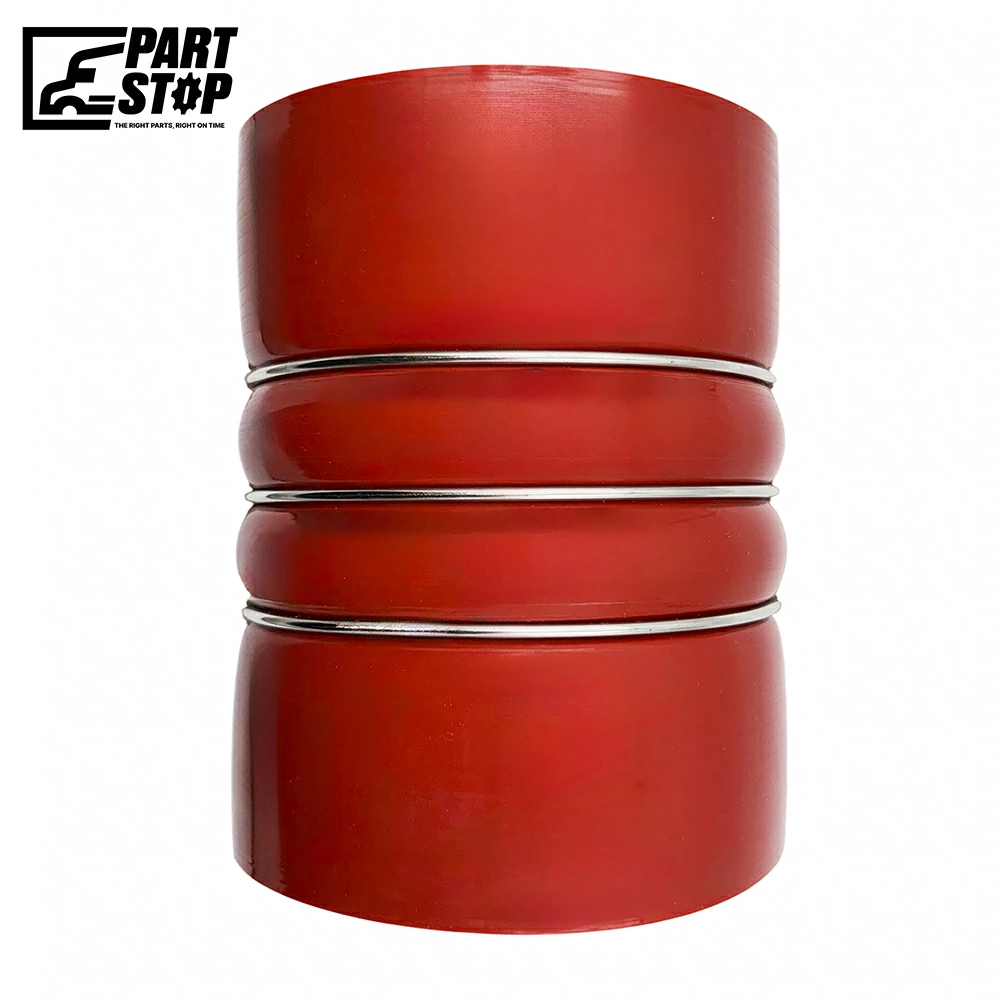
What The 56115450 Is
This is a straight silicone charge air cooler hose measuring 4.5 inches inside diameter by 8 inches long. Four-ply reinforced construction, rated from -40°F to +500°F. It sits between the turbo outlet piping, the charge air cooler, and the intake, carrying hot pressurized air after compression. It is a boost-side hose, not a coolant hose, even though it lives in the cooling system group.
The four-ply build matters because charge air pressure cycles every time the driver gets into the throttle. Thin-wall or worn rubber balloons under 30 PSI and eventually splits at the clamp bead. Silicone holds shape through the pressure cycle and does not go brittle when the truck sits overnight at -20°F, which is where standard EPDM boots usually let go first.
Silicone also handles what the air stream carries. Blow-by oil mist from the crankcase vent coats the inside of every CAC hose on a high-mile engine. That oil softens ordinary rubber from the inside out. This material resists oil, coolant contact, and ozone cracking on the outside where the hose faces radiator heat and road spray.
Why These Numbers Cross
The headline number 56115450 and the combined reference 5611545020435801 point at the same physical hose. The longer string is an extended internal reference that carries the base number inside it — read the first eight digits and you have 56115450. Suppliers pad numbers this way for warehouse and catalog systems, so the same hose ends up listed twice under what looks like two different parts.
Cross-reference on a CAC hose comes down to four measurements: inside diameter at each end, overall length, wall construction, and shape. This one is 4.5" ID both ends, 8" long, straight, four-ply. Any number that describes those same dimensions describes the same part, regardless of whose catalog it came out of. Numbers from other manufacturers are listed here for identification only.
That said, a matching number is a starting point, not a guarantee. Confirm by measuring the old hose before it goes in the trash: caliper the ID at the sealing surface, tape the length between pipe ends, and check whether the original was straight or had a hump. Verify against your VIN or the number printed on the old boot.
Checks Before You Order
Pull the old hose and look at the failure. A clean circumferential split at the clamp line usually means the clamp was overtightened or the pipe bead is worn flat. A ballooned, soft, oil-soaked hose means age and blow-by. If the inside is glazed and hard, heat got to it. Fix the cause or the replacement fails the same way.
Inspect the mating pipe ends while you are in there. Corroded, pitted, or bent tubing will not seal against any hose, silicone or rubber. Clean the sealing surface back to bare metal. Reuse the factory clamp locations and set the clamps to spec — silicone takes a set differently than rubber and overtightening cuts into the plies.
56115450 Cross-Reference & Interchange Numbers
These manufacturer and aftermarket numbers commonly cross-reference to 56115450. Use them to identify the part — then confirm the exact fit by VIN or the number stamped on your old unit before you order. An interchange is a starting point, not a fitment guarantee.
| Brand / Line | Cross-Reference Numbers |
|---|---|
| PartStop combined | 5611545020435801 |
Frequently asked questions
Is 5611545020435801 the same hose as 56115450?
Yes. The longer string is an extended reference that contains the base number 56115450 in its first eight digits. Both call out the same 4.5" x 8" four-ply silicone CAC hose. Confirm against the number on your old part or by VIN before ordering.
Will silicone last longer than the stock rubber CAC boot?
In most fleet service, yes. Silicone resists the oil mist that comes off the crankcase vent and does not go brittle in cold weather, which is where rubber boots typically split. The four-ply reinforcement also resists ballooning under boost pressure. Service life still depends on clamp torque and pipe condition.
How do I know if my CAC hose is the cause of a power loss?
A leaking charge air hose drops boost pressure and often sets a low-boost or intake-pressure fault. Pressurize the charge air system with shop air and listen at each boot. Check for oil streaking at the clamp lines, and squeeze the hose cold — a soft, spongy feel means the plies are breaking down.
Not sure it fits? We check before you pay.
Run your VIN and we’ll match parts to your exact truck, or call the counter — a person who knows trucks verifies fitment by OEM number before the order ships. No wrong-box returns.
More cross-reference guides
Need the part, not just the reading?
Every part below is a Premium Quality aftermarket Direct Replacement with published OEM cross-reference numbers, a 6+ month warranty and same-business-day shipping from Tacoma, WA. Not sure it fits? Run your VIN — or call and a person who knows trucks will verify fitment before you pay.